How to Choose Tyres for Daily Delivery & Ride-Hailing Bikes in India

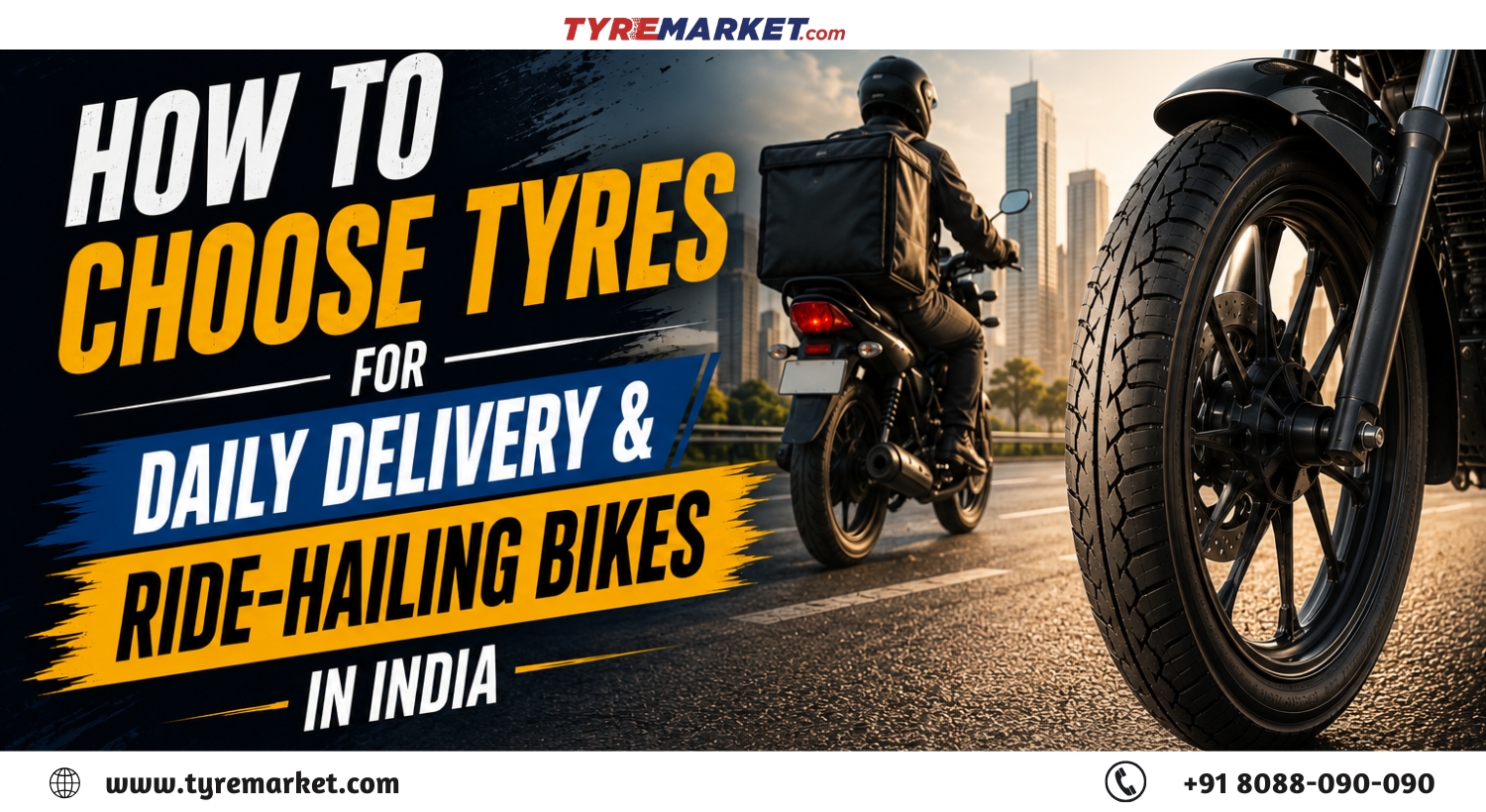
The modern Indian gig economy relies on riders who treat their motorcycles as primary business assets. For delivery agents and ride-hailing partners, every kilometre logged directly affects their livelihood. This reality creates demands that differ vastly from those of a casual commuter.
When a motorcycle spends twelve hours a day navigating dense urban congestion, carrying varying loads, and darting across unpredictable road surfaces, tyres become the most critical component for operational efficiency and personal safety.
The Commercial Rider’s Core Requirements
To get the most value out of a motorcycle tyre, a commercial rider must look for a balance of high mileage, consistent wet grip, and strong puncture resistance.
If a tyre focuses only on lasting a long time, the rubber compound will be very hard. While a hard tyre can have excellent tread life, it might struggle to offer consistent grip on wet or oily roads. This can cause the bike to slide during emergency braking, posing a significant safety risk on crowded city streets.
On the other hand, a tyre that uses a soft rubber compound will offer strong grip and excellent braking confidence, but the tread will wear down within a few months of heavy commercial use. Buying new tyres every few months destroys a rider’s profit margins, making soft tyres a poor financial decision for gig workers.
The economic reality of the delivery business means downtime is the ultimate enemy. If your bike has a flat tyre or you are stuck at a repair shop, you are losing money. You are missing order surges, daily incentives, and customer tips.
Therefore, a smart rider treats a tyre purchase as a long-term business decision rather than a quick, cheap fix. You need tyres that use smart material science to deliver high mileage while keeping you safe during sudden downpours.
Evaluating Tyre Technologies for Heavy-Duty Use
Understanding the specific engineering features of modern bike tyres helps you choose a model that can survive the daily demands of commercial operations.
Compound Science and Longevity
The design of the rubber compound determines how many thousands of kilometres a tyre can run before it becomes bald. Standard mass-market tyres like the MRFZapper series have been a common sight on Indian roads for decades because they offer a predictable life for regular commuters. They are affordable and do a basic job well enough.
However, the relentless demands of commercial delivery work have forced tyre manufacturers to develop more specialised options. For instance, the Eurogrip DuraPro is engineered with high-mileage polymers that resist the intense friction of constant stop-and-go riding.
This specialised compound helps the tread wear down more slowly, even when the bike is heavily loaded with bulky delivery boxes. By choosing a tyre with this kind of advanced compound science, a commercial rider can extend the time between tyre replacements and protect daily earnings.
Structural Resilience and Load Capacity
A commercial motorcycle often carries extra weight, whether it is a heavy backpack filled with groceries or an adult pillion passenger on a ride-hailing trip. This extra weight puts immense pressure on the tyre sidewalls and internal casing. Traditional commuter tyres like the CEAT Zoom series provide a smooth and comfortable ride when you are traveling alone or with a pillion.
Another solid option in the market is the EurogripRenif Bee Connect, which uses a reinforced carcass design that improves shock absorption. This extra structural strength allows the tyre to handle heavy loads without deforming or losing its shape.
When a tyre maintains its proper shape under heavy pressure, the bike doesn’t veer or lean to one side, and the rider experiences less physical fatigue after a long day in the saddle. Reinforced casings also safeguard the wheel rims from bending when they hit deep potholes under load.
Thermal Management and Continuous Running
When a motorcycle is ridden continuously for hours in the peak of the Indian summer, the air inside the tyre heats up, and the rubber expands. Excessive heat buildup causes traditional rubber to soften, accelerating tread wear and increasing the risk of a sudden blowout. Standard commuter tyres are not built to dissipate this heat efficiently over long periods of non-stop operation.
High-performance tread designs use heat-dissipation technologies that keep the rubber stable even under high stress. While premium sport tyres are typically meant for larger capacity touring bikes, the same design philosophies are now being used to make everyday commercial tyres more resilient against thermal stress.
Managing this heat ensures that your tyres deliver the same predictable braking grip at the end of a long shift as they did at the beginning. This thermal stability prevents premature structural degradation of the internal casing cords.
Navigating the Trade-offs Between Cost and Performance
When it is time to replace a worn tyre, many riders make the mistake of choosing the cheapest option available at their local puncture shop. While an entry-level tyre might save you a little bit of money upfront, it usually ends up costing you much more over the course of a year.
Cheaper tyres often have higher rolling resistance, which means your engine has to work harder to push the bike forward. This extra effort burns more petrol, quickly inflating your daily fuel bills and eating into your delivery margins.
In contrast, investing a small premium in a modern tyre with computer-optimised tread grooves will pay off in multiple ways. Tyres with deep, directional water channels clear water away from the contact patch. This feature gives you the confidence to continue working during heavy monsoon rains when delivery demand is high and platform incentives are at their peak.
Choosing a tyre with superior wet grip is a simple way to protect your body and your income from unexpected accidents. Over a typical operational life of 30,000 kilometres, a premium fuel-efficient tyre can save enough petrol to pay for its own replacement cost.
Which Tyre Should You Choose?
The following matrix provides a clear, objective breakdown of how different popular tyre options compare across the key metrics that matter most to commercial riders.
| Feature | Eurogrip DuraPro | MRF Zapper | CEAT Zoom | Eurogrip Renif Bee Connect |
| Mileage Potential | Exceptional | High | High | Very High |
| Puncture Resistance | Very High | Moderate | High | High |
| All-Weather Grip | Very Good | Good | Very Good | Excellent |
| Heat Management | Excellent | Standard | Standard | Excellent |
Conclusion
Selecting a tyre for a delivery or ride-hailing motorcycle is a critical business decision that directly impacts your daily earnings. By moving away from basic, entry-level options and choosing tyres engineered for structural resilience and advanced thermal management, you can keep your bike on the road longer and your work more dependable.
Whether you value the proven track record of classic commuter workhorses or the modern, performance-led advantages of newer specialized models, make sure your final choice is built to handle the heavy demands of commercial riding. Investing in premium rubber reduces operating hazards, maximizes vehicle uptime, and keeps your delivery business running smoothly. Make the choice with long-term uptime and daily earnings in mind.
FAQs
- Why should gig workers choose premium tyres over cheap entry-level options?
Premium tyres use superior rubber compounds that provide safer grip and last longer under heavy loads. For a rider covering over 100 kilometres every day, the long tread life and fuel savings can justify the slightly higher upfront price.
- How exactly does my choice of tyre affect my daily fuel economy?
Tyres designed with modern compounds have lower rolling resistance, meaning they move across the road surface with less friction. This allows your engine to run more efficiently, reducing fuel consumption during long shifts.
- What are the clear signs that my commercial bike tyres need to be replaced?
You should check the built-in wear indicators in the tread grooves. If the tread has worn down to the level of these indicators, or if you notice cracks on the sidewalls and frequent punctures, it is time to buy a new tyre immediately.
- Can buying a high-quality tyre really help reduce the number of punctures I get?
Yes, high-quality commercial tyres are built with thick, reinforced layers underneath the tread. This extra layer makes it much harder for sharp nails, glass shards, and jagged stones to pierce the casing and cause a flat.
- How often should a ride-hailing rider check their tyre pressure?
You should ideally check your tyre pressure twice a week. Because bike taxis carry passengers of varying weights, maintaining the correct pressure prevents the tyre from flexing too much and wearing out prematurely.