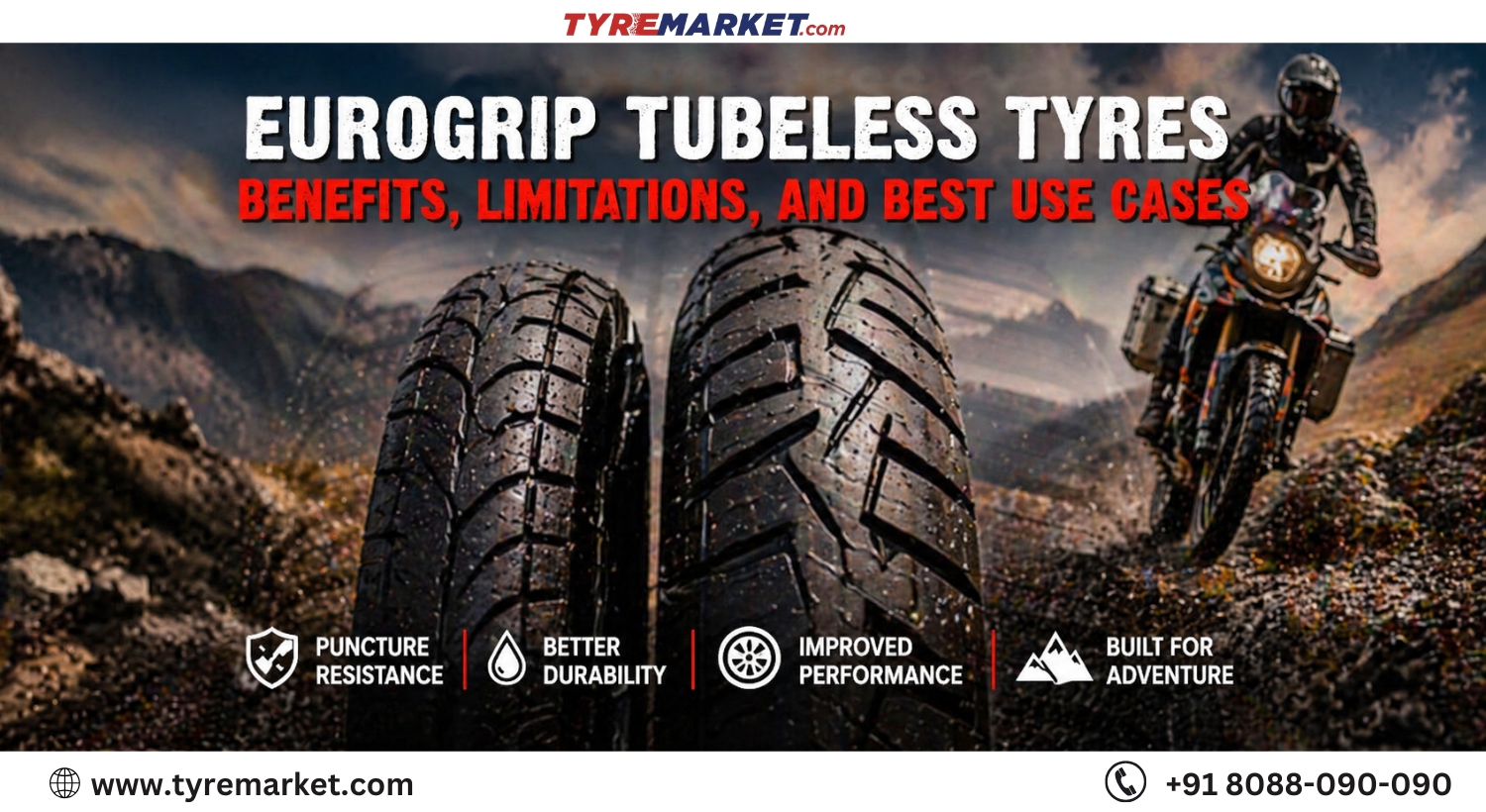
Eurogrip Tubeless Tyres: Benefits, Limitations, and Best Use Cases

If you’ve walked into a tyre shop in India recently, you might have seen the vibrant blue and white branding of TVS Eurogrip. Once known primarily as an OEM (Original Equipment Manufacturer) provider for TVS Motors, Eurogrip has evolved into a standalone powerhouse in the replacement market. As the Indian two-wheeler landscape moves rapidly toward tubeless technology, Eurogrip has positioned itself as the “smart” alternative to legacy brands like MRF and CEAT.
But is a Eurogrip tubeless tyre the right investment for your specific two-wheeler? Before you make a decision, you must understand the strengths and trade-offs of Eurogrip’s tubeless tech, which is essential whether you are navigating the chaotic traffic of Mumbai or taking your Himalayan 450 on a weekend trail.
The Benefits: Why Switch to Eurogrip Tubeless?
The move to tubeless is not just a trend. It is a functional upgrade for safety and efficiency. Eurogrip has invested heavily in its Milan-based R&D centre to ensure its tubeless range meets global standards.
1. Superior Puncture Safety
The biggest advantage of using a Eurogrip tubeless tyre is how effectively it handles a tyre puncture on the road. In a traditional tube-type tyre, even a small nail can cause an instant “blowout,” which can be dangerous at high speeds. With Eurogrip’s airtight seal, the air escapes slowly. This technology allows you enough time to reach a repair shop without losing control of the vehicle.
2. Better Fuel Mileage
The tyre’s fuel mileage depends on its weight too. Eurogrip has considered this, and by eliminating the inner tube, the manufacturer has reduced the “unsprung weight” of the wheel. As a result, the lighter wheel requires less engine power to rotate, leading to a slight but noticeable improvement in your bike’s fuel efficiency. For daily commuters covering 40-50 km, this adds up to significant savings over the tyre’s life.
3. High-Speed Stability and Comfort
Eurogrip’s bike tyres, particularly the radial series like the Protorq Extreme, are optimised for uniform air distribution. Unlike traditional tube tyres, which can sometimes have “cold spots” or uneven pressure points, these tyres stay cooler during long highway runs while maintaining uniform tyre pressure. This ability of tubeless tyres makes the bike feel more “planted” when you lean into corners or cruise at 100 km/h.
The Limitations: What to Consider Before Buying
While the benefits are strong, no tyre is perfect for every scenario. There are a few things you should keep in mind.
- The Rim Requirement: You cannot simply put a tubeless tyre on an old spoke-wheel rim. You need tubeless-ready alloy rims. If you own an older model bike, the cost of upgrading the rims might outweigh the immediate benefits of the tyre.
- Initial Pricing: Eurogrip positions itself as a value-for-money brand, but its high-end tubeless radials can be more expensive than basic tube-type tyres. It is a long-term investment rather than a “cheap fix.”
- Professional Fitment: While repairing a tubeless tyre is easy (often just a plug), the initial fitment requires a proper bead-seating machine. Attempting to fit these at a roadside shop without the right tools can damage the tyre’s bead, leading to permanent air leaks.
Performance Comparison – Which is Better?: Eurogrip vs. MRF vs. CEAT
| Brand | Strength | Best For | Typical Life |
| Eurogrip | Wet grip & Modern Feel | City Commuting & Performance | 40k – 50k km |
| MRF | Durability & High Load | Rough Roads & Commercial Use | 50k – 65k km |
| CEAT | Comfort & Value | Rainy Cities & Budget Seekers | 45k – 55k km |
In 2026, the gap between these brands has narrowed. However, Eurogrip consistently “wins” for riders who prioritize a modern steering feel and confident wet braking. If your daily ride involves flyovers, painted road markings (which get slippery), and sudden traffic stops, Eurogrip’s softer, high-grip compounds offer an edge.
Best Use Cases: Which Eurogrip Should You Buy?
To make your choice easier, we have categorized the most popular Eurogrip tubeless tyres by driving style:
-
The Daily City Commuter (100cc – 125cc)
Best Model: Eurogrip Jumbo GT or ATT Series
If you are riding a Hero Splendor or a Honda Shine, you need a tyre that can handle potholes and stop-and-go traffic without wearing out in a year. The Jumbo GT features a rugged tread that provides “all-weather” grip, making it the perfect companion for the average Indian office-goer.
-
The Performance Enthusiast (200cc – 400cc)
Best Model: Eurogrip Protorq Extreme
For owners of the KTM Duke 390 or TVS Apache RR 310, the Protorq Extreme is a game-changer. It is a W-rated radial tyre that offers incredible grip during aggressive cornering. It uses a dual-compound technology with a hard center (for long life) and soft sides (for maximum grip when leaned over).
-
The Adventure & Touring Rider
Best Model: Eurogrip Sportorq DR
If your SUV-on-two-wheels, such as the RE Himalayan or KTM Adventure, sees a mix of highway and light trails, the Sportorq DR is the answer. It features a block-style tread that digs into gravel for an enhanced grip while remaining surprisingly quiet on the highway.
Final Verdict
Eurogrip Tubeless Tyres is a solid choice for any modern Indian two-wheeler rider seeking a balance of safety and performance. These tyres might not be the “cheapest” or the “hardest” tyre in the market, but they deliver a refined, controlled driving experience, making your bike feel newer than it actually is.
If you spend 90% of your time in the city and are looking for a set of tyres that won’t let you down in a sudden downpour or a surprise pothole, Eurogrip is a solid, professional choice for your next replacement.
FAQs
- Can I use a Eurogrip tubeless tyre with a tube inside?
Technically, yes. If your rim isn’t tubeless-ready, you can put a tube inside a tubeless tyre. However, you will lose the benefits of weight reduction and the “slow-leak” safety feature. It is always better to use the tyre as it was intended.
- How long do Eurogrip tubeless tyres last?
On average, a well-maintained Eurogrip tyre will last between 40,000 and 50,000 kilometres. This depends heavily on your riding style, road conditions, and whether you maintain the correct tyre pressure.
- Is Eurogrip better than MRF for wet roads?
Many riders find that Eurogrip’s newer tread patterns and silica-rich compounds offer a more “secure” feel on wet tarmac than the harder compounds MRF often uses to achieve high mileage.
- Does the use of puncture sealants affect the Eurogrip warranty?
Generally, using a high-quality, ammonia-free sealant will not void your Eurogrip warranty. Additionally, Eurogrip’s inner liner is compatible with most standard sealants for extra protection against air loss. However, it’s important to ensure the sealant you use is non-corrosive to prevent long-term damage to your alloy rims.
- Why do tubeless tyres feel firmer than tube-type alternatives?
Tubeless tyres feature reinforced sidewalls that help in maintaining their structural integrity without the internal support of a tube. This design can lead to a slightly firmer ride if over-inflated. To ensure the best balance of comfort and grip, it’s better to use the vehicle manufacturer’s recommended pressure rather than the maximum limit marked on the tyre.