
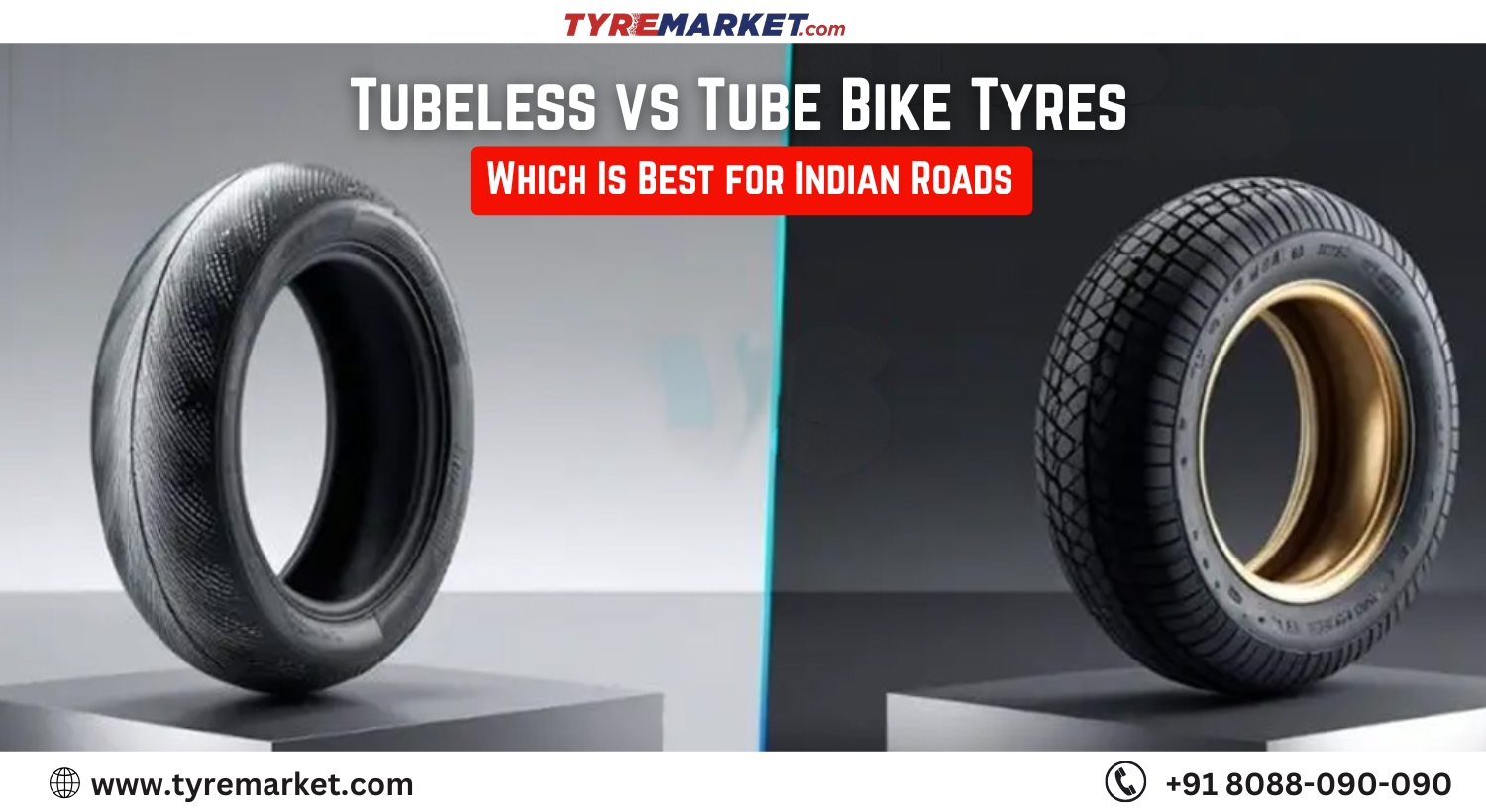
Tubeless vs Tube Bike Tyres: Which Is Best for Indian Roads

Quick Takeaways
- If your bike has alloy or tubeless-ready rims, go tubeless for safer puncture behavior and fast, fuss-free roadside fixes in Indian traffic and monsoons.
- If you ride a spoke-rim motorcycle and spend time off the grid, stay with tubes or invest in a proven tubeless conversion installed carefully and checked often.
- For city and highway mixes, tubeless wins on convenience, confidence, and the ability to roll to safety when something sharp finds your tyre.
- On a tight budget with trusted local puncture shops, tube-type can work, but plan for more downtime and carry spares to avoid being stranded.
For most Indian riders, tubeless tyres are the safer, simpler everyday choice because punctures result in slower deflation and roadside plugs are quick. Tube-type tyres are relevant if you run traditional spoke rims and ride through rough terrain.
Indian Roads Don’t Forgive Mistakes
Daily riding brings its fair share of potholes, speed breakers, gravel shoulders, and monsoon-slick paint lines. What matters most is how a tyre behaves when punctured and how predictable it feels in stop-and-go traffic and sudden braking. Tubeless tyres usually deflate gradually after a nail or screw, giving you time to slow down, signal, and pull over safely instead of fighting a sudden wobble. This extra minute can be the difference between a calm stop and a scary moment on a crowded road.
Two Tyres, Two Philosophies: Tube vs Tubeless Explained Simply
Tube-type setups hold air in a separate inner tube. When a sharp object pierces a tyre and tube, air escapes rapidly and the contact patch can collapse abruptly. Tubeless tyres seal air directly within the rim with an inner liner, so a lodged nail often acts like a temporary plug and leaks slowly instead of releasing all air pressure at once. In simple terms, one setup depends on a tube staying intact, and the other depends on an airtight tyre-rim seal.
When a Nail Strikes
With tubeless tyres, small tread punctures will often let you roll to a safer spot or even home at low speed before you fix it, because the leak path is narrow and controlled. With tubes, the same nail can tear the tube and drop pressure quickly, which is unnerving in traffic or during a wet-weather stop. That difference in puncture behavior is the main reason tubeless has become the go-to for city and highway use.
Five Minutes or Fifty? The Real Cost of a Flat Tyre
Tubeless tyres usually allow a more controlled response to small punctures, often letting the rider reach a safe spot before fixing the issue. Many tread punctures can be repaired from the outside using a plug, without removing the wheel, which keeps downtime minimal. The process is quick, requires fewer tools, and is well suited to roadside situations. Tube-type tyres typically require the wheel to be removed so the tube can be taken out and patched or replaced. This extra work increases repair time and effort, especially during unexpected stops on the road.
Your Rims Decide the Game Before the Tyre Does
If your bike has alloy rims or tubeless-ready wheels, the move to tubeless is straightforward because the rim bed is airtight and the valve sits in the rim itself. Traditional spoke wheels aren’t airtight, so they usually run tubes unless you buy tubeless-ready cross-spoke rims or use a proper sealing kit installed with care. Popular conversion options exist, but the sealing quality, cleanliness of prep, and regular inspections are critical for safety and reliability on Indian roads.
Highways, Villages, and Trails: Choosing What’s Best
On remote and rocky routes, tube-type tyres are commonly used because they are paired with spoked rims, which handle repeated impacts, sharp edges, and uneven terrain with greater resilience than alloy wheels. While a tube can be replaced in the field, the process still takes time and effort compared to fixing a small puncture on a tubeless tyre. For mixed riding that includes highways, village roads, and gravel shoulders, tubeless tyres offer quick plug repairs and slower air loss that helps the bike remain stable if a puncture occurs. When rides involve long road stretches with occasional rough patches, tubeless tyres often provide a more efficient balance of manageability and ride continuity.
Heat, Feel, and Flow: What You Notice After Long Rides
Tubeless setups usually weigh a little less and remove tube friction, which can trim rolling resistance and make the bike feel just a bit freer and steadier at everyday speeds. With no tube rubbing inside, heat build-up is typically lower on long summer runs, helping consistency and tread life when the mercury rises. Many riders also notice a slightly more “modern” braking and cornering feel with tubeless on tarmac because the contact patch is more predictable under load.
Understanding the Real Expense
Upfront, tubeless tyres and compatible rims cost more than basic tube-type combinations, so expect a higher initial bill even if you save time on repairs later. The good news is that most urban and highway puncture shops now handle tubeless plugs quickly, so convenience has caught up with the technology in many Indian cities and towns. If you ride in very remote areas, check local repair familiarity before you switch, or carry your own kit and practice a plug at home.
Tubeless vs Tube-Type at a Glance
| Factor | Tubeless | Tube-type |
| Puncture behavior | Usually slow leak; easier to control and stop safely | Often fast deflation if tube tears; harder to manage mid-traffic |
| Roadside repair | Quick external plugging; wheel stays on | Wheel off, tube patch/replacement; more time and tools |
| Rim requirement | Airtight alloy or tubeless-ready rim bed | Works on standard spoke rims without sealing |
| Heat/efficiency | Less friction and weight, better heat control | Tube adds friction/weight, can run hotter |
| Off-road practicality | Plugs work for small tread holes, sidewalls still tricky | Tube swaps are simple anywhere, but pinch-flats are common |
| Upfront cost | Higher tyre/rim cost | Lower to buy, cheap tubes |
What Smart Riders Always Keep Under the Seat
- Tubeless riders: compact plug kit, mini inflator or CO₂, and a decent pressure gauge so you can fix and go in minutes at the roadside.
- Tube-type riders: spare tube, tyre levers, patches, and a pump, plus basic practice at home so you’re not learning by the highway in the rain.
Bottom line
For everyday use in India, office runs, weekend rides, and monsoon surprises, tubeless is the smarter default option because it turns scary, sudden flats into manageable slow leaks and gets you moving again with a quick plug. Tube-type still has a solid place on spoke-rim bikes, rugged routes, and in areas where simple tube repairs are the only thing available, but for most riders, tubeless delivers the confidence and convenience that matter day in and day out.