How to Read Eurogrip Tyre Sidewall Markings Before Buying

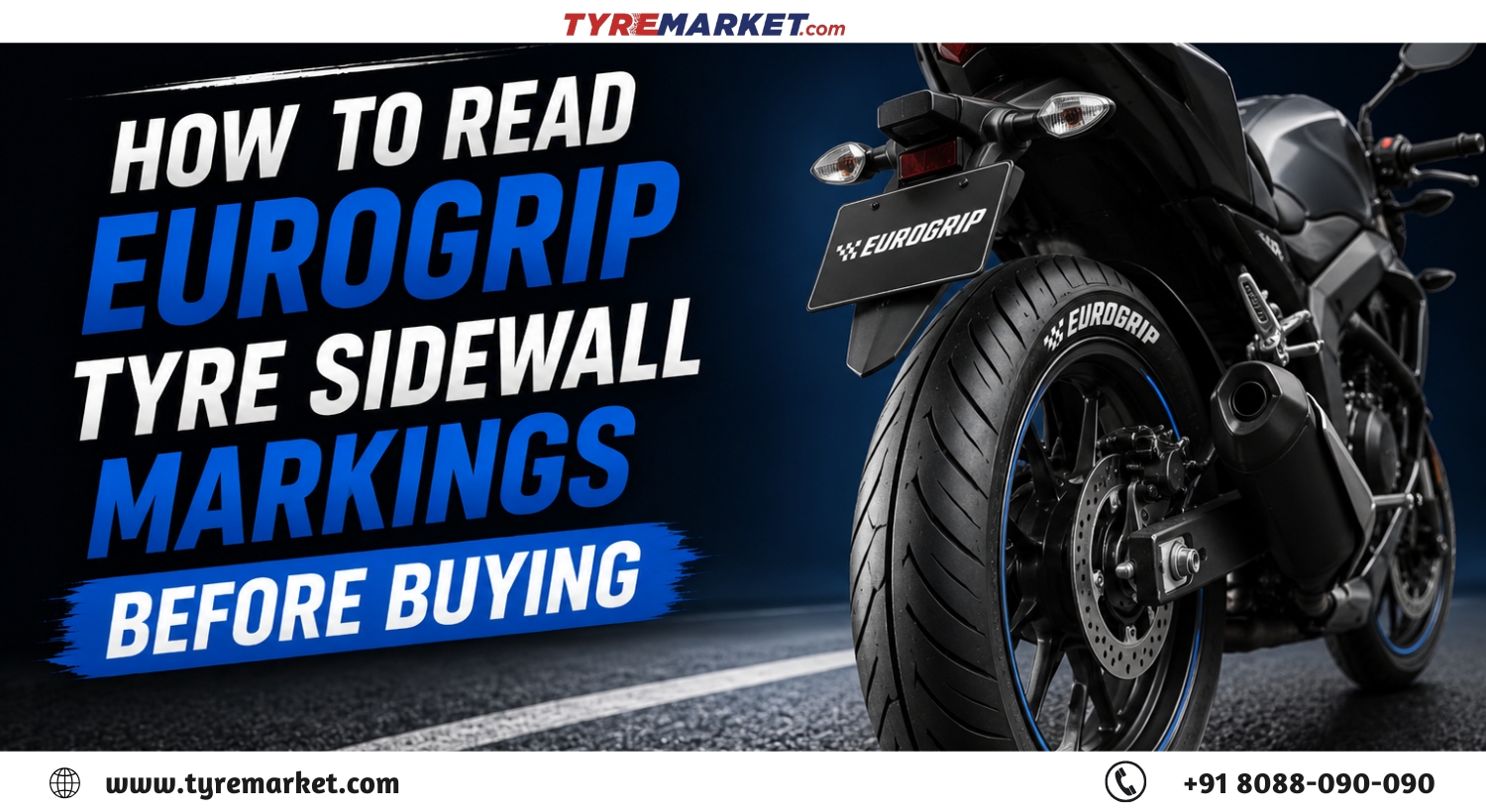
How to Read Eurogrip Tyre Sidewall Markings Before Buying
Buying a new set of bike tyres in 2026 is no longer just about picking a brand and a tread pattern. With the rise of high-performance motorcycles and specialised adventure bikes, the technical requirements for your rubber have become incredibly specific. While most riders rely on a mechanic’s recommendation, the most critical information is actually embossed directly on the side of your tyre.
Learning how to read Eurogrip tyre sidewall markings is the only way to ensure that the set you are buying on Tyremarket is a perfect mechanical match for your machine. This guide will decode the alphanumeric strings, symbols, and safety codes that every rider should know.
The Sidewall as a Technical Spec Sheet
The sidewall is effectively the “birth certificate” and the “manual” of the bike tyre. It tells you how wide the tyre is, how fast it can safely go, and even when it was made. Buying the right brand but the wrong specification, such as a lower speed rating than your bike requires, can lead to poor handling, increased braking distances, or even a dangerous tyre failure at high speeds. Before you click “buy,” you need to understand the language of the sidewall.
Decoding the Primary Size String: The 120/70 ZR17 Breakdown
This is the most prominent marking on any tyre. Using the popular Eurogrip Roadhound as an example, you might see a string like 120/70 ZR17. Here is what those numbers actually mean:
- Section Width (120): Section width is the nominal width of the tyre, written in millimeters, measured from sidewall to sidewall.
- Aspect Ratio (70): Aspect ratio is the height of the sidewall shown as a percentage of the width. So, for a 70 aspect ratio, the sidewall height is 70% of 120mm. A lower number usually indicates a “low-profile” tyre designed for sharper handling.
- Construction (ZR): The ‘R’ stands for Radial, which is the standard for modern performance bikes. The ‘Z’ indicates that the tyre is high-speed rated (over 240 km/h). If you see a ‘-‘ or a ‘B’, it means the tyre is a Bias-ply or Belted-bias construction, typically found on cruisers or smaller commuters.
- Rim Diameter (17): This is the diameter of the wheel rim shown in inches that the tyre is designed to fit.
The Load Index and Speed Rating (The “58W” Mystery)
Immediately following the size string, you will see a two-digit number and a letter, such as 58W. These are the most critical markings for your safety.
- Load Index (58): This code represents the maximum weight the tyre can carry when properly inflated. A code of 58 corresponds to 236 kg. You must ensure the combined load index of your front and rear tyres exceeds the total weight of your bike, fuel, rider, and pillion.
- Speed Rating (W): This letter indicates the maximum sustained speed the tyre can handle.
-
- H: Up to 210 km/h
-
- V: Up to 240 km/h
-
- W: Up to 270 km/h
If your motorcycle is capable of 220 km/h, fitting an ‘H’ rated tyre is illegal and unsafe, as the centrifugal forces could cause the tread to delaminate.
Checking the Birth Certificate: The DOT and Stencil Code
Tyres are made of organic compounds that degrade over time, even if they aren’t being used. To check the “freshness” of your Eurogrip tyre, look for a 4-digit number usually enclosed in an oval window.
- Example: “1226”
- The first two digits (12) represent the week of manufacture.
- The last two digits (26) represent the year (2026).
The Freshness Rule: In 2026, you should generally avoid buying “new” tyres that have been sitting in a warehouse for more than three years. Rubber loses its flexibility and grip as it ages, a process known as “dry rotting.”
The Safety Signals: TWI and Rotation Arrows
Eurogrip includes several visual cues on the sidewall to help you maintain your tyres and stay safe.
Tread Wear Indicator (TWI)
Look for the letters “TWI” or a small triangle symbol on the upper sidewall. These point to the wear bars located inside the tread grooves. When the tread surface reaches the level of these bars, the tyre has reached its legal limit (usually 0.8mm to 1.6mm) and must be replaced immediately.
Rotation Arrow
Most Eurogrip tyres have a directional tread pattern that helps channel water away from the tyre’s contact patch. An arrow on the sidewall indicates the required direction of rotation. Fitting a tyre backward can cause severe “aquaplaning” in the rain and lead to irregular wear and vibrations.
Construction Details: Tubeless vs. Tube-Type
Before buying, you must confirm if the tyre is compatible with your rims.
- TL (Tubeless): Designed to be used without an inner tube. These are standard for alloy wheels.
- TT (Tube-Type): Requires an inner tube. These are typically used for spoked wheels.
You will also see the marking “M/C”, which simply stands for “Motorcycle.” This is a regulatory marking to prevent consumers from accidentally mounting a small car, bike tyre onto a motorcycle rim, as the bead profiles are different.
Specific Eurogrip Technology Branding
Because Eurogrip produces specialised bike tyres, you will often find proprietary technology logos on the sidewall. On the Protorq Extreme or Roadhound, look for the “0° Steel Belt” marking. This confirms the tyre uses high-tensile steel cords to maintain stability at high speeds.
For adventure-focused tyres, you may see “M+S” (Mud and Snow), indicating the tread is designed to offer better and consistent traction on loose or slippery surfaces than a standard street tyre.
Conclusion: Buying with Confidence
Knowing how to read Eurogrip bike tyre sidewall markings turns you from a passive consumer into an informed rider. When your order arrives from Tyremarket, take 60 seconds to perform a visual audit:
- Verify the size matches your owner’s manual.
- Ensure the speed rating and load index meet your bike’s performance specs.
- Check the manufacturing date to ensure the rubber is fresh.
- Confirm the TL or TT status matches your wheels.
If you notice any “wobbling” or vibrations after fitment, remember the 2026 manufacturer rule: these must be reported within the first month or first 0.5mm of wear to be considered for a manufacturing warranty claim.
FAQs
- What happens if I use a tyre with a lower load index than recommended?
The tyre will overheat due to excessive flexing. This can cause the sidewall to crack or, in extreme cases, lead to a sudden blowout while riding with a pillion.
- Is a “V” rated tyre better than an “H” rated tyre?
It is “better” in terms of heat resistance and speed capability. However, higher speed-rated tyres often have stiffer carcasses, which might slightly change the ride comfort on smaller bikes.
- Why are there yellow or red dots on my new Eurogrip tyre sidewall?
These are balance marks. The yellow dot usually indicates the lightest point of the bike tyre, which should be aligned with the heavy point of the rim (usually the valve stem) during installation.
- Can I fit a Radial (R) tyre on the rear and a Bias (B) tyre on the front?
This is generally discouraged unless specified by the manufacturer. Mixing tyre constructions can lead to unpredictable handling characteristics, especially during mid-corner transitions.
- Does Eurogrip use a different marking for electric bikes?
In 2026, many Eurogrip tyres now feature an “EV” or “E-Ready” logo on the sidewall, indicating the compound is optimised for the high torque and increased weight of electric motorcycles.