Best Tyres for Indian Monsoon SUV Driving

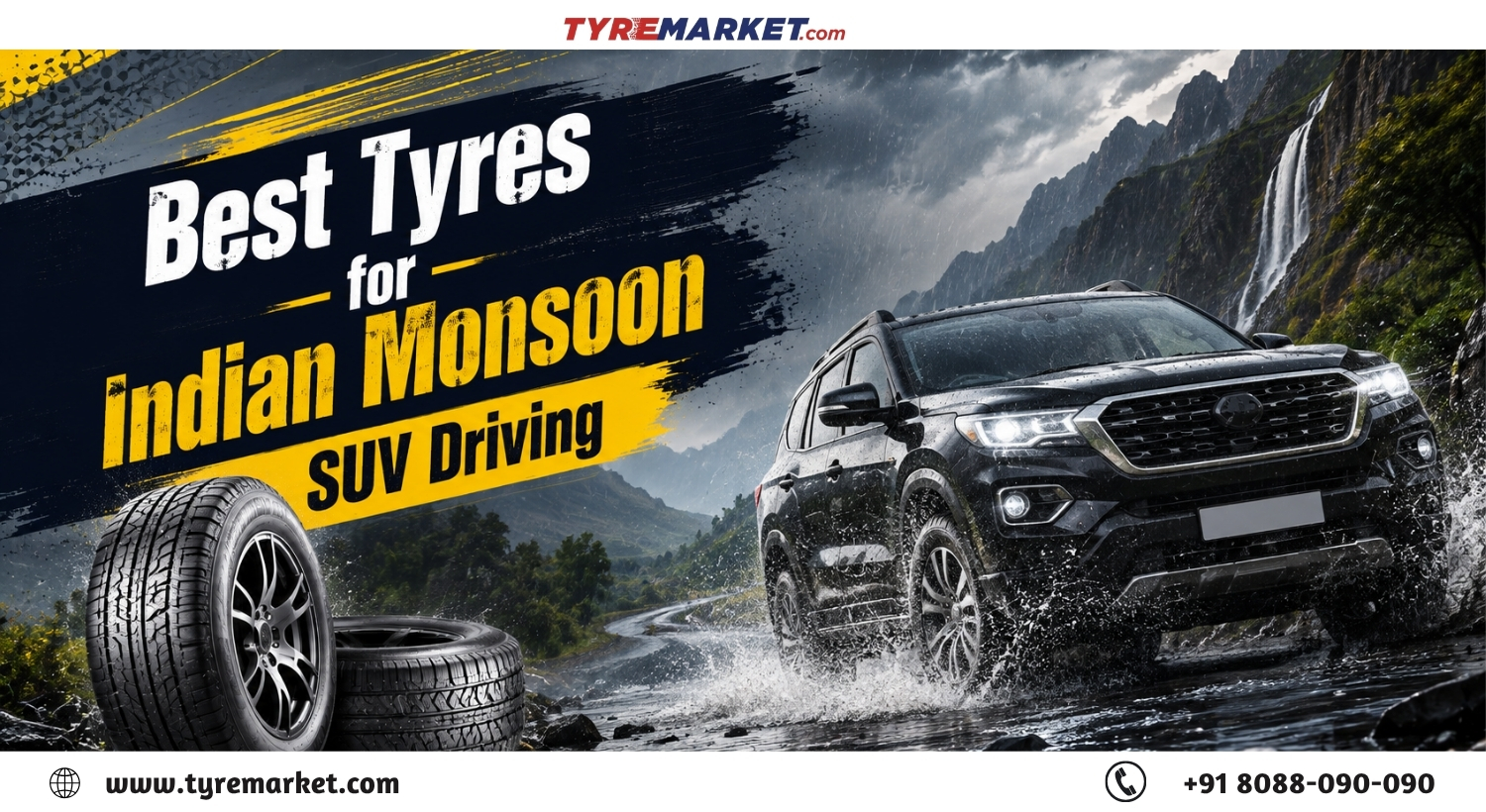
From June to September, monsoon conditions can change the way Indian roads behave. A highway that feels predictable in April can become wet, uneven or prone to standing water within a few months. For SUV owners, those changes make tyre choice much more important in everyday driving.
SUVs put more load through their tyres because of their higher weight. On a wet road, that extra load can increase the braking distances as the tread might not be able to clear water quickly enough. Steering control can also suffer, with aquaplaning becoming a bigger concern at high speed. For SUV owners, correct tyre choice becomes even more important once the monsoon arrives.
Three tyres consistently stand out when Indian SUV owners look specifically at monsoon performance: the CEAT SecuraDrive SUV, the Bridgestone Dueler D684, and the Michelin Primacy SUV. All three are SUV-specific highway tyres, and here is how they compare on wet roads.
Quick Takeaways
- The CEAT SecuraDrive SUV was developed for Indian road conditions, with four wide longitudinal grooves, centre-to-shoulder cross-grooves, 3D Groove Wall technology and chamfered shoulder blocks that aid wet-road braking.
- It is OEM-fitted on the Hyundai Creta and Kia Seltos, validated at NATRAX, India’s national high-speed test facility, and available in sizes from 205/65 R 16 to 235/65 R 17 covering most Indian compact and mid-size SUVs.
- The Bridgestone Dueler D684 uses a Lightning Groove pattern to move water away from the contact patch. Its three central ribs and lateral grooves also help maintain traction on wet roads.
- The Michelin Primacy SUV uses EverGrip technology with hidden grooves that open as the tyre wears, maintaining wet braking performance throughout the tyre’s life rather than only when it is new.
- For Indian monsoon conditions, where roads shift from dry to heavily flooded within minutes, the SecuraDrive SUV’s multi-directional water evacuation and India-specific compound give it the most relevant wet-road safety engineering of the three.
What Monsoon Roads Actually Do to Your Tyres?
The Indian monsoon is not a single consistent weather event. It produces different road conditions depending on surface age and drainage, and changes multiple times within a single drive.
Three specific hazards are most common in such conditions. First, standing water from poor drainage pools across lanes instead of running off to the side, and a tyre that cannot evacuate water fast enough will aquaplane.
The first rain can be especially slippery because water mixes with dust, oil and diesel residue left on the road. A more flexible compound can maintain better grip on this surface than a harder one.
Lastly, the temperature drop that accompanies heavy rain stiffens some compounds at exactly the moment when wet grip is most needed.
All three are present on Indian roads, and each requires different aspects of wet-grip engineering to handle well.
The Top Three Tyres For Indian Monsoon
All three tyres in this comparison are SUV-specific highway terrain tyres. The differences come down to how each one addresses the specific wet-road engineering challenge.
1. CEAT SecuraDrive SUV: Built Around Indian Monsoon Roads
The SecuraDrive SUV is the tyre in this comparison that was most specifically re-engineered for Indian conditions. It started as a European highway tyre and underwent a dedicated re-engineering process for Indian roads.
This means its wet-grip design accounts for the types of water accumulation, surface variation, and temperature range in the Indian monsoon, rather than the more predictable wet conditions of European test cycles.
Four wide longitudinal grooves run the full length of the contact patch. Alongside them, centre-to-shoulder cross-grooves open outward, creating water-evacuation paths in multiple directions at once. On a road with standing water across the entire lane, this multi-directional design keeps more of the contact patch in contact with the road surface than a single-directional groove system would.
The chamfered shoulder blocks are the feature most directly relevant to emergency braking in monsoon conditions. Instead of square block edges on the outer tread, CEAT angles them so the block faces bite into the road surface more aggressively during a hard stop.
Paired with fluidic sipes across the tread, this gives the tyre a wet braking character that shows up most noticeably when the surface is at its worst.
The silica compound with high-flexibility polymers directly addresses the temperature-drop problem. On a hot, dry day before the monsoon, the compound stays responsive. When a heavy downpour drops the road temperature, the flexible polymers keep the compound pliable rather than stiffening, so wet grip does not drop off at the moment it is most needed.
3D Groove Wall technology gives the groove channels a three-dimensional shape rather than flat walls, improving grip within the grooves and helping reduce wet braking distances. CEAT also tested the SecuraDrive SUV at NATRAX in Indore, with OEM fitments for the Hyundai Creta and Kia Seltos in sizes ranging from 205/65 R 16 to 235/65 R 17.
2. Bridgestone Dueler D684: The Trusted Highway SUV Tyre
The Dueler D684 is a popular SUV tyre in India with a Lightning Groove lateral pattern that helps in creating channels for rainwater to move away from the contact patch, helping the tread stay in contact with the road on wet surfaces.
You can also see three central ribs in the tyre’s tread pattern that add stability during straight-line braking on wet roads. Its non-directional tread also means it can be rotated in any position without changing the way it performs.
Body plies provide structural durability over rough patches, and they are available in 16-, 17-, and 18-inch sizes, covering the Mahindra Scorpio, Tata Safari Storme, and Hyundai Creta, among others.
While its wet-road performance is solid and well-proven, the SecuraDrive SUV goes over and beyond with its multi-directional cross-groove design, which provides wider coverage on roads with standing water pooling across entire lanes, which is the more common Indian monsoon scenario.
3. Michelin Primacy SUV: The Wet Braking Specialist
The Michelin Primacy SUV uses EverGrip technology to maintain wet-weather performance as the tread wears. Its hidden grooves open up gradually with tread wear, providing an additional 22% water-evacuation capacity instead of relying only on the original grooves as they become shallower.
For Indian SUV owners who run tyres to 30,000 or 40,000 kilometres, this is helpful, as most tyres noticeably lose wet grip as they wear.
The Flexmax 2.0 compound maintains grip on wet and dry surfaces, and the StabiliGrip sipe design keeps tread blocks stable during cornering and braking. It is available in sizes covering the Toyota Fortuner, Hyundai Tucson, and Mahindra XUV500.
Its priority is braking performance and longevity rather than the broad, multi-directional water management of the SecuraDrive SUV. For large SUV owners who cover high mileage and want wet braking that holds up over years, it makes a strong case.
Comparison Matrix
This comparison table below covers all the strengths of all three tyres, along with their best use case.
| Wet-Grip Feature | CEAT SecuraDrive SUV | Bridgestone Dueler D684 | Michelin Primacy SUV |
| Water Evacuation | 4 longitudinal + centre-to-shoulder cross grooves | Lightning Groove lateral pattern, 3 central ribs | Hidden grooves (EverGrip), circumferential grooves |
| Wet Braking | 3D Groove Wall + chamfered blocks + fluidic sipes | Lateral grooves + non-directional pattern | Flexmax 2.0 + StabiliGrip sipes |
| Compound | Silica + high-flex polymers, India re-engineered | Standard rubber compound, non-directional | Flexmax 2.0, wet and dry optimised |
| Performance Over Tyre Life | Consistent, India-tuned compound | Consistent across rotation configurations | EverGrip hidden grooves maintain wet braking as tyre wears |
| OEM Fitment | Hyundai Creta, Kia Seltos | Mahindra Thar, Scorpio, Tata Safari | Toyota Fortuner, Hyundai Tucson, XUV500 |
| Best For | Monsoon wet grip on Indian roads | Highway touring, broad SUV fitment | High-mileage SUVs, lasting wet braking performance |
Which Tyre Is Right for Your SUV in Monsoon?
For wet-road safety during the monsoon season in a compact or mid-size SUV, the CEAT SecuraDrive SUV is designed specifically to meet that requirement. The multi-directional groove design, chamfered shoulder blocks, and India-specific compound address standing water, oily surface film, and temperature-driven stiffening in a single tyre.
For a larger SUV covering high annual mileage, the Michelin Primacy SUV’s EverGrip technology is the most specific answer to wet braking performance that holds up over several years.
For a reliable, proven highway SUV tyre with solid wet credentials across a broad range of Indian SUV fitments, the Bridgestone Dueler D684 is a dependable and widely trusted choice.
Conclusion
Indian monsoon driving can expose a tyre’s weaknesses quicker than you may realise. Standing water, oily roads and sudden changes in temperature all affect grip, so the tyre needs to cope with those conditions in everyday use.
The CEAT SecuraDrive SUV’s India-specific re-engineering, multi-directional groove design, and NATRAX validation make it the tyre in this comparison that most directly addresses what monsoon SUV driving in India actually involves.
FAQs
- When should I replace my SUV tyres before the monsoon?
Before the monsoon arrives, start by doing a quick check of your tyres’ tread depth using the Tyre Depth Indicators (TDI). The legal minimum tread depth in India is 1.6 mm, although many safety experts advise it’s better to replace the tyre when their tread depth reaches 3 mm, especially when wet-road grip is a priority.
You should also check the age of the tyre, as after about five years, the rubber can harden, and wet grip may fall even when the tread still looks usable. Replacing the tyres before the monsoon also gives you more time to find the right size rather than making the change once the rains have already started.
- Does a heavier SUV aquaplane more easily than a passenger car?
Yes. An SUV puts more load on its tyres, so clearing water becomes more demanding, particularly at higher speeds. The tread has to move a larger volume of water away from the contact patch to keep the tyre in contact with the road. That is why a passenger-car tyre with a strong wet-grip rating is not automatically equivalent to an SUV-specific tyre.
- Is it worth upgrading tyres specifically for the monsoon season?
For most Indian SUV owners, yes. The difference in wet braking between a worn tyre and a tyre such as the CEAT SecuraDrive SUV can be significant, particularly during an emergency stop. Tyres also affect everyday driving throughout the monsoon, from June to September, rather than only in situations that occur occasionally.
- Should I reduce tyre pressure during monsoon for better grip?
No. Running the tyres below the recommended pressure can make aquaplaning more likely at speed and can also cause uneven wear. The correct pressure allows the tread to sit properly on the road. It is worth checking the pressure more often during the monsoon, since temperature changes can cause it to fluctuate.
- Does the CEAT SecuraDrive SUV work year-round or only in monsoon?
It can be used throughout the year. The CEAT SecuraDrive SUV is a highway-terrain SUV tyre designed for Indian weather, with cross grooves, chamfered blocks and a flexible compound helping on wet roads. Its reinforced carcass, cornering stiffness and silica compound also support stable dry-road handling and highway comfort.