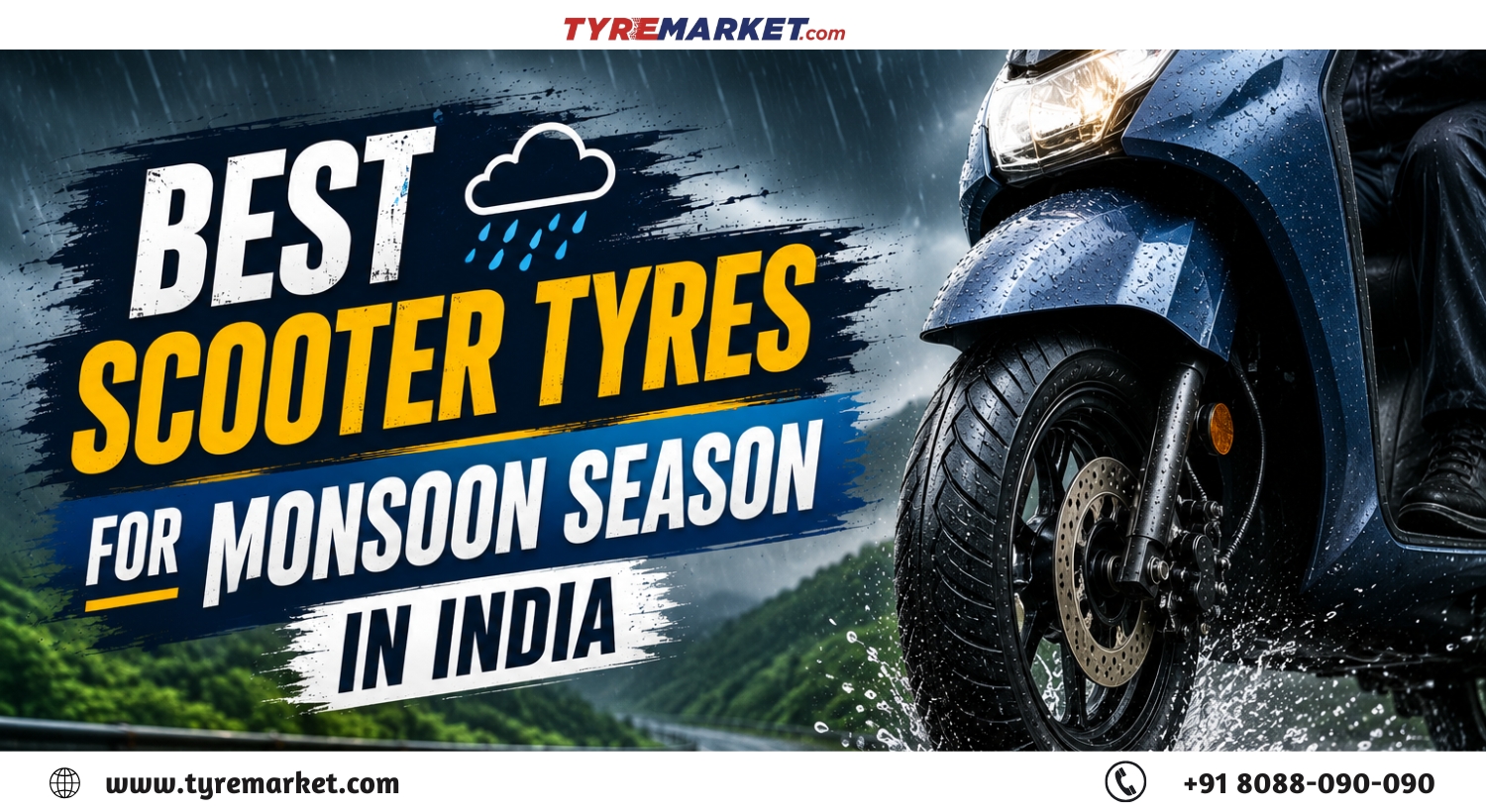
Best Scooter Tyres for Monsoon Season in India

Key Takeaways
- TVS Eurogrip Pancer II is the best all-round pick for everyday monsoon riding, thanks to its interlocked tread and sipe design built for wet, uneven Indian roads.
- If wet-weather braking is your top priority, the Michelin City Extra can be worth the higher price. Alternatively, if you cover several kilometres at a stretch and want a tyre that lasts longer, the MRF Zapper is the more sensible choice.
- Eurogrip’s warranty treats 0.8 mm of tread depth at the wear indicator as the point where a tyre needs replacing, a useful benchmark to check before the rains set in.
Rain can expose problems that often go unnoticed through the rest of the year. The same scooter that felt perfectly stable in summer can suddenly feel unbalanced over a painted lane marking or while braking at a busy junction. While the road conditions can change in the monsoon, that’s not the only issue. In most cases, your tyres have simply reached the point where they can no longer deal with wet surfaces as effectively as they once did.
That is why the monsoon is the season when many riders start looking for a replacement. A fresh set of tyres clears water better, grips damp roads more consistently and makes everyday rides less demanding.
One of the biggest misconceptions about purchasing tyres is that the more expensive a tyre is, the better it will perform. While premium tyres do offer premium features, you do not have to buy the most expensive tyre to get those benefits. The right tread design and the right compound often matter more than the price on the tag.
In 2020, MoRTH proposed new tyre safety norms covering rolling resistance, wet grip and noise emission, in line with standards already used in several European markets. Until these are in force, Indian buyers don’t have a standard wet-grip label to check, which makes tread design and brand reputation the more reliable guide when shopping before the monsoon.
Which scooter tyre handles both city roads and monsoon conditions best?
Each tyre below has a different strength, so the better choice depends on how you use your scooter. Some focus on wet-road grip, others on durability or everyday commuting. Understanding your personal requirements will make it easier to choose the tyre that best suits how you use your scooter.
1. TVS Eurogrip Pancer II – Best Overall for the Monsoon
Not every scooter spends its life on smooth city roads. Some tackle broken streets, standing water and daily traffic, and the TVS Eurogrip Pancer II is developed with exactly that sort of riding behaviour in mind.
Its interlocked tread pattern with sipes improves grip on wet roads, while a uniform contact patch keeps the scooter feeling stable as the road surface changes. Eurogrip also combines its TriP, DuCT and D2T technologies to improve grip, stability and tyre life. The tyre carries Eurogrip’s Mega Warranty Policy, which stays valid until the tread wears down to 0.8 mm at the tread wear indicator, whichever comes first, giving riders a clear, measurable point at which to plan a replacement rather than guessing.
Those features make the biggest difference on rain-soaked city roads. The scooter maintains its balance and grip when crossing shallow water, braking remains consistent and uneven roads do not upset the steering as easily. It is the sort of tyre that quietly gets on with the job, which is exactly what most riders want during the rainy season.
2. Michelin City Extra – Best for Wet Roads and Braking
Anyone who rides through the monsoon regularly knows that braking can feel very different once the roads become wet. The Michelin City Extra has been built around Water Sipe Technology, a 100% silica-based compound, and reinforced, puncture-resistant construction. According to Michelin, the tyre also delivers better wet grip and longer life than the previous City Pro generation.
The difference is most noticeable when braking, turning on wet corners, and driving on rough roads. None of these conditions upset the chassis, making it much easier to drive on waterlogged roads. For riders who spend an hour or more on the road each day, those small improvements do add up quickly.
3. MRF Nylogrip Zapper – Best for Long-Term Ownership
Many scooter owners replace tyres only after covering thousands of kilometres, so durability matters just as much as wet grip. The MRF Nylogrip Zapper features a directional tread pattern, which helps in channelling water away from the contact patch, while its tread design has been developed to improve wet grip, braking performance, and cornering stability on everyday roads.
The Zapper continues to perform well on rain-soaked roads, takes broken stretches of tarmac in its stride, and delivers the same dependable performance even after covering plenty of kilometres. If your scooter spends more time on the road than parked at home, the Zapper is well worth considering.
Note: These tyres are available in a wide range of scooter sizes, but availability varies by scooter model. Always confirm the recommended tyre size for your scooter before placing an order.
Which Scooter Tyre Should You Buy for the Monsoon?
Here’s a quick overview to help you compare the best scooter tyres for monsoon season at a glance:
| Tyre | Best For | Why It Stands Out |
| TVS Eurogrip Pancer II | Everyday monsoon riding | Interlocked tread with sipes and a uniform contact patch improves grip and stability on wet roads |
| Michelin City Extra | Wet roads and braking | Water Sipe Technology, silica compound and reinforced construction improve braking and wet-road grip |
| MRF Zapper | Long-term ownership | Directional tread pattern improves water channelling, braking and wet-road stability |
There isn’t one tyre that suits every scooter rider. The better choice depends on the roads you ride every day.
If your scooter rarely gets a day off, the TVS Eurogrip Pancer II is the safest all-round recommendation. It copes well with waterlogged roads, broken surfaces and everyday commuting, making it the easiest recommendation for most riders.
The Michelin City Extra is aimed at riders who spend long hours on the road, especially during the rainy season. If wet-weather braking is high on your list of priorities, it is one of the strongest options available, albeit at a higher price than other options.
For riders who cover plenty of kilometres throughout the year, the MRF Zapper is definitely one of the more practical choices. It balances wet-road performance with the durability expected from a tyre that sees regular everyday use.
Final Thoughts
Around the monsoon, the roads become less forgiving, braking distances increase, and even familiar routes require more caution. Under these conditions, the tyres undergo a lot more stress than they do in normal weather and road conditions.
A fresh set of tyres will not change the weather, but it can make your scooter feel far more sure-footed when road conditions are at their most challenging. However, the best scooter tyre for the monsoon isn’t the one with the fanciest design or from the most reputable manufacturer. It’s the one that matches your daily routine.
When buying a tyre, think about the roads you ride every day before making a decision. A scooter that spends its life in city traffic, for example, will have different demands from one that regularly covers long highway stretches.
For a closer look at how Eurogrip tyres perform specifically in wet weather, see our guide on Eurogrip Tyres Wet Braking: Safe for Indian Monsoon?
FAQs
- Which tyre tread pattern works best for both city riding and monsoon conditions?
An interlocked tread pattern with sipes handles both broken city roads and wet monsoon surfaces well, since it channels water away from the contact patch while keeping enough rubber in contact with the road for grip in stop-start traffic. This is the design used on the TVS Eurogrip Pancer II.
- Which Indian tyre brand has the best wet grip for monsoon commuting on scooters?
There is no single answer because riding habits vary from one owner to another. For most riders, the TVS Eurogrip Pancer II is a well-rounded option thanks to its wet-road grip, stable handling and everyday usability. The Michelin City Extra is another strong choice if wet-weather braking is your highest priority.
- Should I replace my scooter tyres before monsoon season even if the tread looks okay?
Check the tread depth against the wear indicators first. Eurogrip’s warranty policy treats 0.8 mm at the tread wear indicator as the point where a tyre needs replacing. If the tread is close to that mark, or you notice cracks or uneven wear on the sidewall, it is worth replacing the tyre before the rains rather than after. Reduced grip on wet roads is often one of the first signs that a tyre is nearing the end of its service life.
- Can scooter tyres hydroplane on Indian roads during heavy rain?
Hydroplaning happens when a tyre cannot channel water away from the contact patch fast enough and loses touch with the road surface. It is more likely at higher speeds and on tyres with worn or shallow tread, which is exactly why tread depth and design matter more during the monsoon than at any other time of year.
- What wet grip rating should I look for when buying tyres before monsoon in India?
India does not currently require tyres to carry a wet-grip rating, unlike the EU labelling system used in several European markets. MoRTH has proposed similar norms covering wet grip, rolling resistance and noise, but until they take effect, the safest approach is to look at tread design, sipe count and brand reputation rather than a rating.
- Does tyre pressure affect monsoon riding?
Yes. Incorrect tyre pressure reduces the size and shape of the contact patch, affecting grip, braking and overall stability. Checking tyre pressure every couple of weeks becomes even more important during the monsoon.
- Should I replace both scooter tyres at the same time?
If both tyres are nearing the end of their service life, replacing them as a pair is the better option. A new tyre paired with a heavily worn one can upset the scooter’s balance, especially during hard braking or on wet roads.