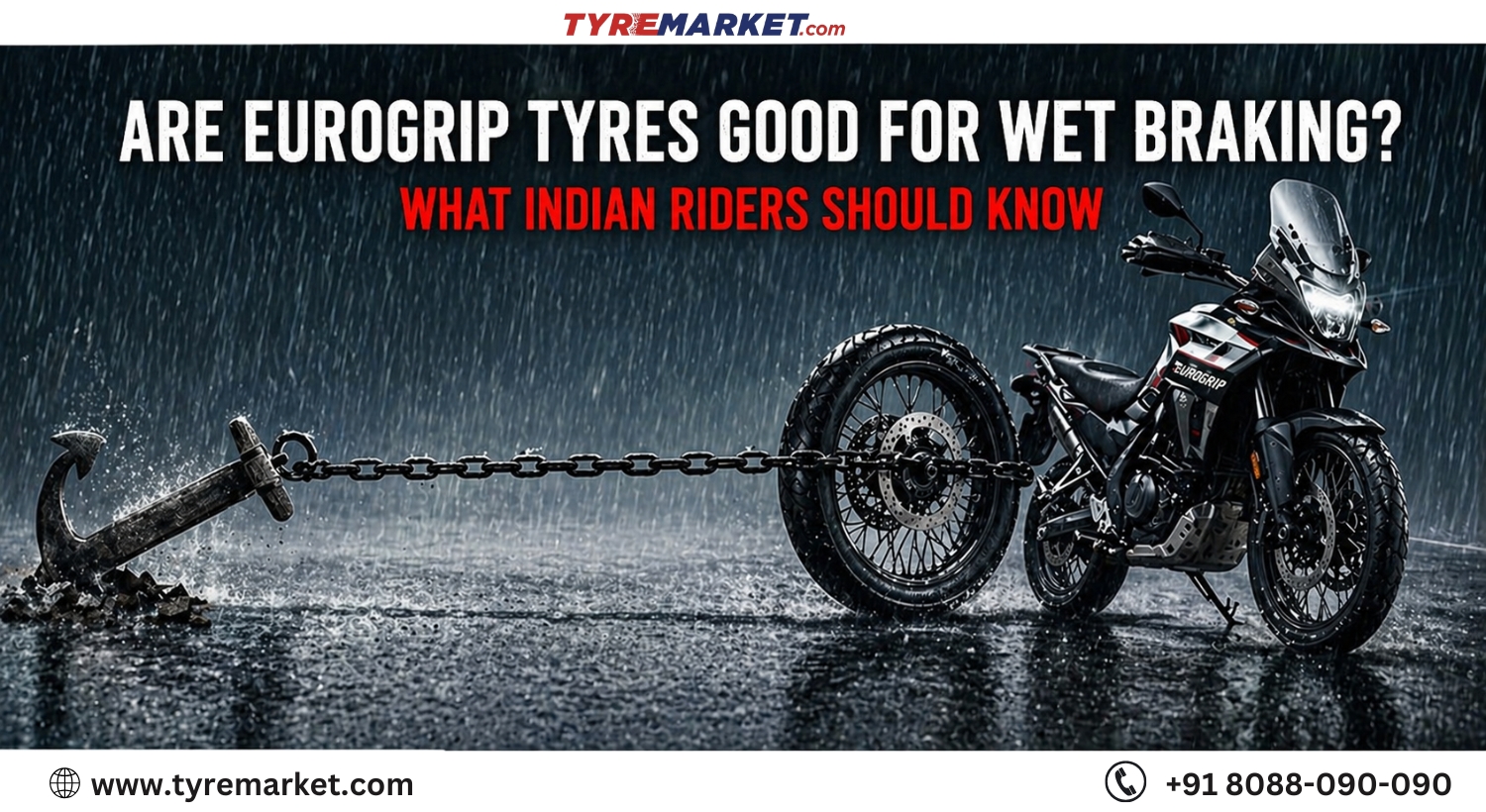
Are Eurogrip Tyres Good for Wet Braking? What Indian Riders Should Know

Riding a motorcycle in India during the monsoon is a massive test of both skill and equipment when the clouds break over a city like Mumbai or a highway in Kerala, the road surface changes in an instant.
The mix of accumulated dust, oil leaks from older vehicles, and standing water creates a low-friction environment where a standard tyre can easily lose its footing. Regardless of whether you are navigating a KTM RC 390 through a flooded underpass or commuting on a Hero Splendor, the ability to stop safely is the most critical performance metric you should consider.
This is why Eurogrip tyres for wet braking have become a focal point for safety-conscious riders across the country. Engineering a tyre that provides a short stopping distance on wet tarmac requires a delicate balance of chemical compounds and physical tread architecture.
It is not just about having deep grooves. It is about how the rubber interacts with the road at a molecular level, while a film of water tries to push them apart. Let’s see how Eurogrip’s bike tyres are optimized for wet braking.
1. The Chemical Edge: Understanding High Silica Compounds
Traditional tyres feature carbon black in their rubber compound for durability. However, while carbon block improves mileage, it can lose flexibility in cold, wet conditions.
When the rubber hardens, it can no longer conform to the road’s microscopic imperfections. This hardness results in a complete loss of traction. To combat this, the premium range of Eurogrip tyres uses a high-silica compound technology.
- Supple Rubber: Silica is a specialized additive that keeps the rubber supple and sticky even when temperatures drop during a heavy downpour.
- Molecular Grip: By maintaining this flexibility, the tyre can achieve much higher wet road traction.
- The First Rain Trap: This is particularly vital in the first few minutes of rain when oil and grime create a sludge on the road that requires maximum chemical grip to penetrate.
2. Pumping the Road Dry: OpT PaD Technology
While chemistry provides the grip, the tread pattern handles the physical removal of water. At high speeds, a phenomenon called hydroplaning can occur. Hydroplaning happens when the water on the road cannot be moved out of the way fast enough, creating a wedge of liquid that lifts the tyre off the tarmac.
Once the tyre is floating on water, your braking and steering inputs become completely useless. Eurogrip addresses this through their Optimised Tread Pattern, also known as OpT PaD. This design features grooves and slits that serve as a high-speed drainage channel.
- Water Evacuation: As the tyre rotates, the centre grooves gather water and channel it toward the tyre’s shoulders.
- Surface Tension: The use of sipes, small slits in the tread blocks, helps break the surface tension of water.
- Road Contact: This design allows the rubber to make direct contact with the road surface, even on wet roads.
For a rider on a Yamaha R15 or a KTM Duke, this mechanical evacuation keeps the bike planted during a quick lane change or sudden deceleration in the rain. This level of aquaplaning resistance in two-wheelers is what separates premium rubber from budget options.
3. Emergency Braking and Rider Feedback
One of the most dangerous aspects of wet-weather riding is the unpredictability of the brakes. If a tyre does not provide proper feedback, the rider might push the brakes too hard, causing the wheels to lock up, leading to a skid. This is especially true for bikes without ABS, like older bikes or entry-level scooters.
Eurogrip performance tyres are engineered to provide a progressive feel, which means that as you apply the brakes, you can feel exactly how much grip is available.
- Structural Rigidity: The tyre carcass’s rigidity prevents excessive flexing under hard braking, maintaining contact patch stability.
- Safety Margin: By improving wet-road traction and stopping distance, Eurogrip gives the rider those extra few meters that often make the difference between a safe stop and a collision. This is critical during emergency braking on wet roads.
4. Which Eurogrip Model Should You Choose?
Selecting the right tyre depends on your motorcycle and your typical riding environment. Different bikes have different needs when it comes to staying safe in the rain.
| Bike Category | Recommended Model | Primary Benefit |
| City Commuters | Eurogrip Jumbo GT | Rugged blocks that clear mud and water easily |
| Performance Bikes | Eurogrip Protorq Extreme | Radial tech with maximum silica for lean angle grip |
| Big Bikes / Tourers | Eurogrip Roadhound | W rated for high speeds with massive water drainage |
5. Professional Maintenance for Monsoon Safety
Even the best motorcycle tyres for rain in India require proper care to function at 100% capacity.
The Importance of Tread Depth
During the dry season, you might get away with a slightly worn tyre. In the rain, those grooves are your only way to move water. If your tread is below the 1.5mm mark, your risk of hydroplaning increases significantly.
The Tyre Pressure Myth
You must maintain the correct tyre pressure. There is a common misconception that lowering your tyre pressure provides more grip in the rain. In reality, under-inflated tyres cause the tread grooves to collapse, preventing them from properly evacuating water.
Always stick to the PSI levels recommended by the vehicle manufacturer for the best TVS Eurogrip monsoon safety.
Conclusion
Riding in the rain does not have to be a gamble for Indian motorcyclists. When you understand the science behind Eurogrip tyres for wet braking, it becomes clear that safety is a result of engineering rather than luck.
By combining high-silica compound technology with an Optimized Tread Pattern, Eurogrip provides a level of security that lets you focus on the road ahead. Whether you are a daily commuter or a long-distance tourer, upgrading your rubber is the most effective safety move you can make before the next monsoon arrives.
FAQs
- Does a silica-based compound affect the bike’s handling on dry roads?
Not at all. In fact, high silica compounds often improve dry handling as well. Silica helps the rubber remain flexible over a wider temperature range. This means you get a consistent grip from the moment you start your ride. It does not matter if the tarmac is hot or cold.
- Can I fit a wet-weather tyre on my scooter like an Activa or NTORQ?
Yes. Eurogrip offers specialized tubeless tyres for scooters that feature the same wet-weather technology. Given the smaller wheel size of scooters, having a tyre that can evacuate water quickly is even more important for stability on flooded city streets.
- Why do my tyres feel slippery on road markings like zebra crossings?
Road paint is non-porous and becomes incredibly slick when wet. No matter how good your tyres are, they will have less grip on painted lines than on tarmac. It is always best to avoid hard braking or sharp turns while your tyres are directly on road markings during the rain.
- Is the Roadhound suitable for superbikes?
The Roadhound is a W-rated radial tyre. This means it is tested for speeds up to 270 km/h. It is specifically built for high-performance motorcycles. It offers some of the best high-speed stability and water dispersal in its class.
- How do I identify if my tyre is ready for the monsoon?
Check the Tread Wear Indicator (TWI) located in the grooves of your tyre. If the tread surface is level with these small rubber bumps, it is time for a replacement. For monsoon safety, it is always better to replace your tyres slightly earlier rather than waiting until they go completely bald.