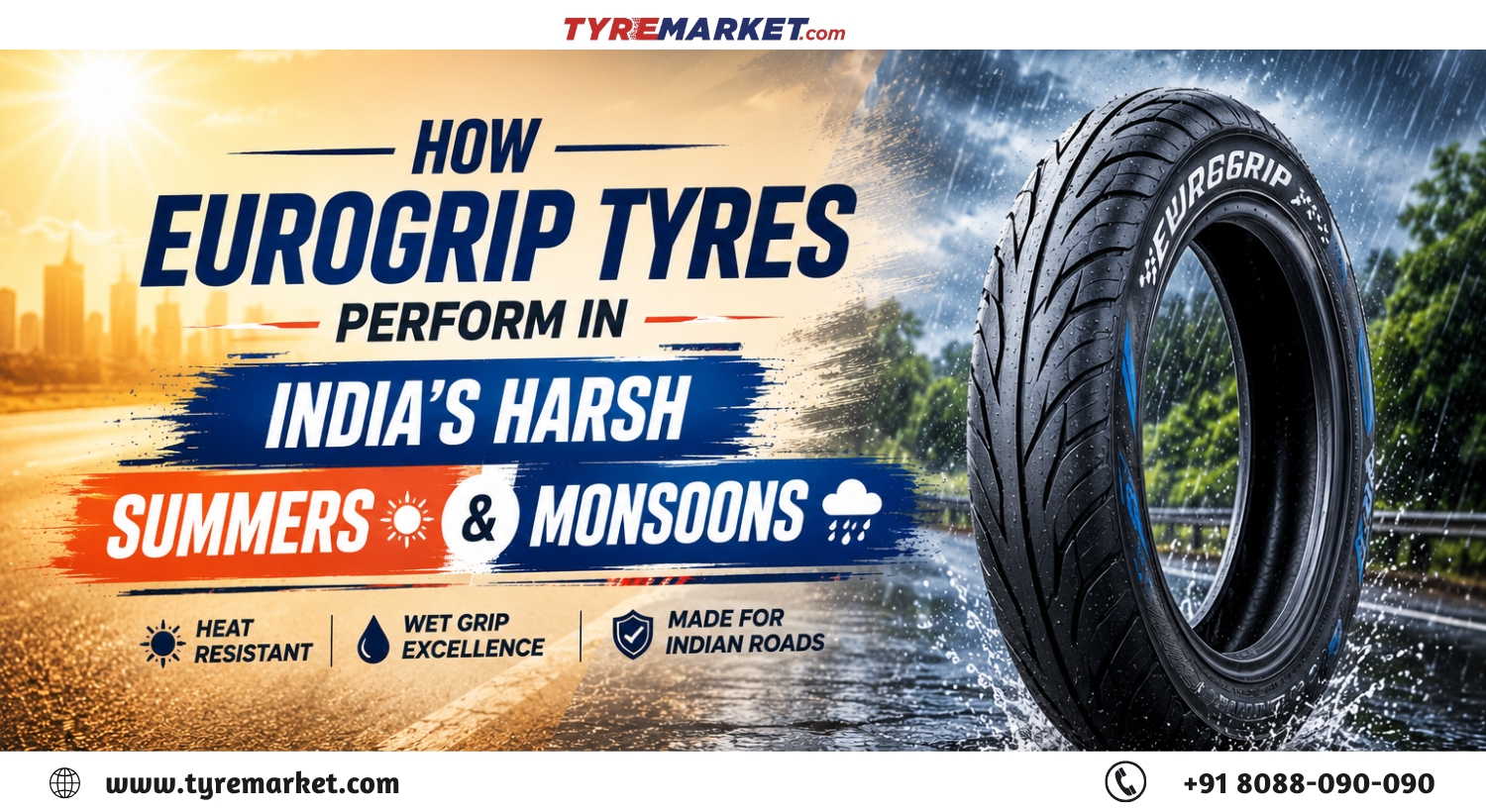
How Eurogrip Tyres Perform in India’s Harsh Summers & Monsoons

Key Takeaways
- Summer heat and monsoon rain place very different demands on a tyre, but most riders use the same set year-round, so the tyre needs to handle both without a seasonal swap.
- Delhi NCR regularly sees summer temperatures cross 45°C, according to IMD heatwave advisories, which is exactly the kind of sustained thermal stress the Protorq Extreme HR is built to handle.
- Eurogrip’s Warranty Policy treats 0.8 mm of tread depth at the wear indicator as the point where a tyre needs replacing, a useful benchmark to check before either season sets in.
- The Pancer II (scooters), ATT 455 Remora (everyday motorcycle commuting) and Protorq Extreme HR (premium/high-speed motorcycles) each suit a different kind of rider, so the right pick depends on what you ride and how.
India’s weather pushes tyres through very different seasons every year. Summer, for example, raises road temperatures, increasing heat buildup during long rides, while the monsoon replaces dry roads with standing water, loose gravel and slippery surfaces. As most riders use the same motorcycle or scooter throughout the year, their tyres need to perform consistently from one season to the other.
A tyre that feels reassuring on a dry morning should offer the same confidence after an afternoon downpour. That consistency depends on more than tread depth alone. The rubber compound, tread pattern and overall construction all play a part in how the tyre responds as temperatures rise or the roads turn wet.
Eurogrip understands these challenges and has developed different tyres for different riding needs to help riders navigate everyday Indian road conditions.
How Extreme Heat in Cities Like Delhi NCR Affects Tyre Performance?
Indian summers can put tyres under constant stress, especially in cities like Delhi NCR where temperatures often cross 45°C as per the recent data from IMD heatwave advisories. Long hours on hot tarmac can increase the internal temperature of the tyre, which in turn accelerates tread wear. Such situations highlight the importance of maintaining the correct tyre pressure throughout the summer season.
The rubber compound plays a major role here. A compound that heats up too quickly can lose consistency during long rides, while the tyre’s construction has to keep the contact patch stable as temperatures continue to rise. The Protorq Extreme HR has been developed with those conditions in mind.
The tyre combines a high-silica compound with a 0° steel belt radial construction. The silica compound helps maintain grip across a wide range of operating temperatures, while the steel belt supports the contact patch during sustained high-speed riding. Eurogrip has also developed the tread profile to distribute pressure uniformly across the tyre, helping it stay stable as road temperatures rise.
Those features suit riders who spend long hours on the road or regularly ride during the hottest months of the year, including occasional highway trips out of cities like Delhi NCR. The tyre stays predictable through fast corners, on the highway, and during everyday commuting, even after hours on heated roads.
How Wet Roads Affect Tyre Performance
The first spell of rain changes the road dramatically. Water mixes with dust, oil, and loose dirt that have built up over the summer, reducing the tyre’s grip. Once the roads are wet, the tread pattern becomes just as important as the rubber compound because the grooves help move water away from the contact patch quickly enough to keep as much of the tyre in contact with the road as possible.
The Eurogrip Pancer II features an interlocked tread pattern and sipes that create additional biting edges on wet surfaces. Eurogrip also uses a uniform contact patch to keep the tyre stable as the surface changes from dry tarmac to standing water or patched roads. Supporting technologies such as TriP, DuCT and D2T further improve grip, stability and tyre life under everyday riding conditions.
Riders can notice the difference when braking in the monsoon, regardless of whether you’re riding through Mumbai’s flooded streets or in Kerala’s steady rainfall. The scooter feels in control even on damp roads, steering remains predictable in traffic, and uneven surfaces are less likely to disrupt the balance of the tyre.
Once the tread wears down to 0.8 mm at the wear indicator, the point at which Eurogrip’s own warranty policy considers a tyre due for replacement, wet-road grip and braking confidence both drop off noticeably. This is worth checking before the rains set in rather than after the first heavy downpour.
Tyres for Indian Riding Conditions
Most riders do not keep a separate set of tyres for summer and monsoon. The same tyres are expected to handle high temperatures in May and heavy rain a few weeks later. That makes an all-round commuter tyre a practical choice for everyday riding.
The Eurogrip ATT 455 Remora is one of the best tyres from the manufacturer and features a shark-skin-inspired tread pattern, large shoulder blocks, and a rounded profile. The tread helps disperse water on wet roads, while the shoulder blocks support the tyre during cornering and the rounded profile keeps steering smooth and progressive through everyday riding.
The tyre feels equally comfortable on a dry weekday ride to work, through an unexpected shower on the way home or during a longer weekend ride. It delivers predictable handling across changing weather conditions.
Which Eurogrip Tyre Should You Choose?
Different riding patterns call for different tyres. Here’s a quick guide to the Eurogrip range based on how you use your motorcycle or scooter.
| Riding Style | Recommended Eurogrip Tyre | Best Suited For | Season Strength |
| Daily scooter commuting | Pancer II | Wet-weather stability, city traffic and everyday comfort | Monsoon |
| Everyday motorcycle commuting | ATT 455 Remora | Balanced year-round performance across mixed road conditions | Both Seasons |
| Premium motorcycles | Protorq Extreme | High-speed stability, confident cornering and regular highway use | Summer |
| High-mileage commuting | Jumbo GT | Riders covering long distances throughout the year | Both Seasons |
Looking After Your Tyres Through Every Season
Summer and the monsoon place different demands on your tyres. A few simple checks throughout the year can help maintain grip, improve tyre life and keep your motorcycle or scooter performing as it should.
During Summer
- Check tyre pressure regularly: Measure it before your first ride of the day, as tyre pressure rises naturally once the tyres heat up.
- Inspect the tread for uneven wear: High road temperatures and long rides can accelerate wear, particularly if the tyre pressure is incorrect.
- Look for cuts or damage: Hot roads and rough surfaces can expose weak spots that may go unnoticed during everyday riding.
During the Monsoon
- Check the tread depth: The tyre’s tread should be well above the 0.8 mm wear indicator for the tread grooves to clear water efficiently and maintain grip on wet roads.
- Inspect the tyres after riding through potholes or flooded roads: Look for cuts, embedded stones or other damage that could affect performance.
- Replace worn tyres on time: Once the tread reaches the wear indicators, wet-road grip and braking performance can drop noticeably.
Final Thoughts
Indian weather puts tyres through very different conditions over the course of a year. For example. summer brings prolonged heat, especially in cities like Delhi NCR, while the monsoon demands dependable grip on wet, unpredictable roads from Mumbai to Kerala. Replacing tyres every season is neither practical nor economical, so it makes sense to choose a set that performs well all year, like Eurogrip tyres.
Eurogrip builds different tyres to suit different riding needs. The Protorq Extreme is aimed at riders who want stability on long rides in hot weather, while the Pancer II is designed for everyday scooter use in changing conditions. The ATT 455 Remora, meanwhile, offers a well-rounded option for year-round motorcycle commuting.
Choosing the right tyre still begins with your motorcycle, your riding habits and the conditions you face every day. Choose the one that matches the way you ride, and you’ll get the best out of it throughout the year.
For a closer look at wet-weather braking specifically, see our Eurogrip Tyres Wet Braking: Safe for Indian Monsoon? guide.
FAQs
1. Which Indian tyre brand has the best wet grip for Kerala monsoon commuting on scooters?
Eurogrip’s Pancer II is built specifically for wet-weather stability on scooters, and features an interlocked tread pattern and sipes that help maintain grip through heavy monsoon conditions like those in Kerala.
2. How do I know if my motorcycle tyres are safe for Mumbai’s monsoon season?
Check the tread depth against the wear indicators. Eurogrip’s warranty policy treats 0.8 mm at the tread wear indicator as the point where a tyre needs replacing. If your tread is close to that mark, or you notice cracks or uneven wear, it’s worth replacing the tyre before Mumbai’s monsoon rather than during it.
3. What tyres work best for Delhi NCR’s extreme heat and occasional highway trips?
The Protorq Extreme HR is built for exactly this combination. Its high-silica compound maintains grip across a wide range of operating temperatures, while the 0° steel belt radial construction keeps the tyre stable during sustained high-speed highway riding, both important in a city where summer temperatures regularly cross 45°C.
4.Do Eurogrip tyres perform well in both summer and the monsoon?
Yes. Many Eurogrip road tyres are built with advanced technologies, such as high-silica compounds, optimised tread patterns, and modern construction, to maintain dependable grip in both hot summers and wet monsoon conditions.
5. Which Eurogrip tyre is best for year-round commuting?
The ATT 455 Remora is one of the most versatile options in the range for everyday motorcycle commuting. Riders looking for a scooter tyre can consider the Pancer II, while the Protorq Extreme is better suited to premium motorcycles that see a mix of commuting and weekend riding.
6. Does hot weather reduce tyre life?
High temperatures can increase tread wear, particularly if the tyre pressure is incorrect or the motorcycle is used for long highway rides. Maintaining the recommended tyre pressure and checking the tyres regularly will help maximise their service life.
7. Are Eurogrip tyres suitable for riding during the monsoon?
Yes. Many Eurogrip tyres use tread patterns and grooves developed to disperse water away from the tread, helping the tyre maintain better road contact during wet conditions. Riding with sufficient tread depth and the correct tyre pressure remains equally important.
8. How often should I check my tyres during the summer and monsoon?
A quick tyre inspection every couple of weeks is usually enough for most riders. Check tyre pressure and tread wear, and look for cuts, cracks, or embedded objects. During the monsoon, it is also worth inspecting the tyres after riding through deep potholes or flooded roads.