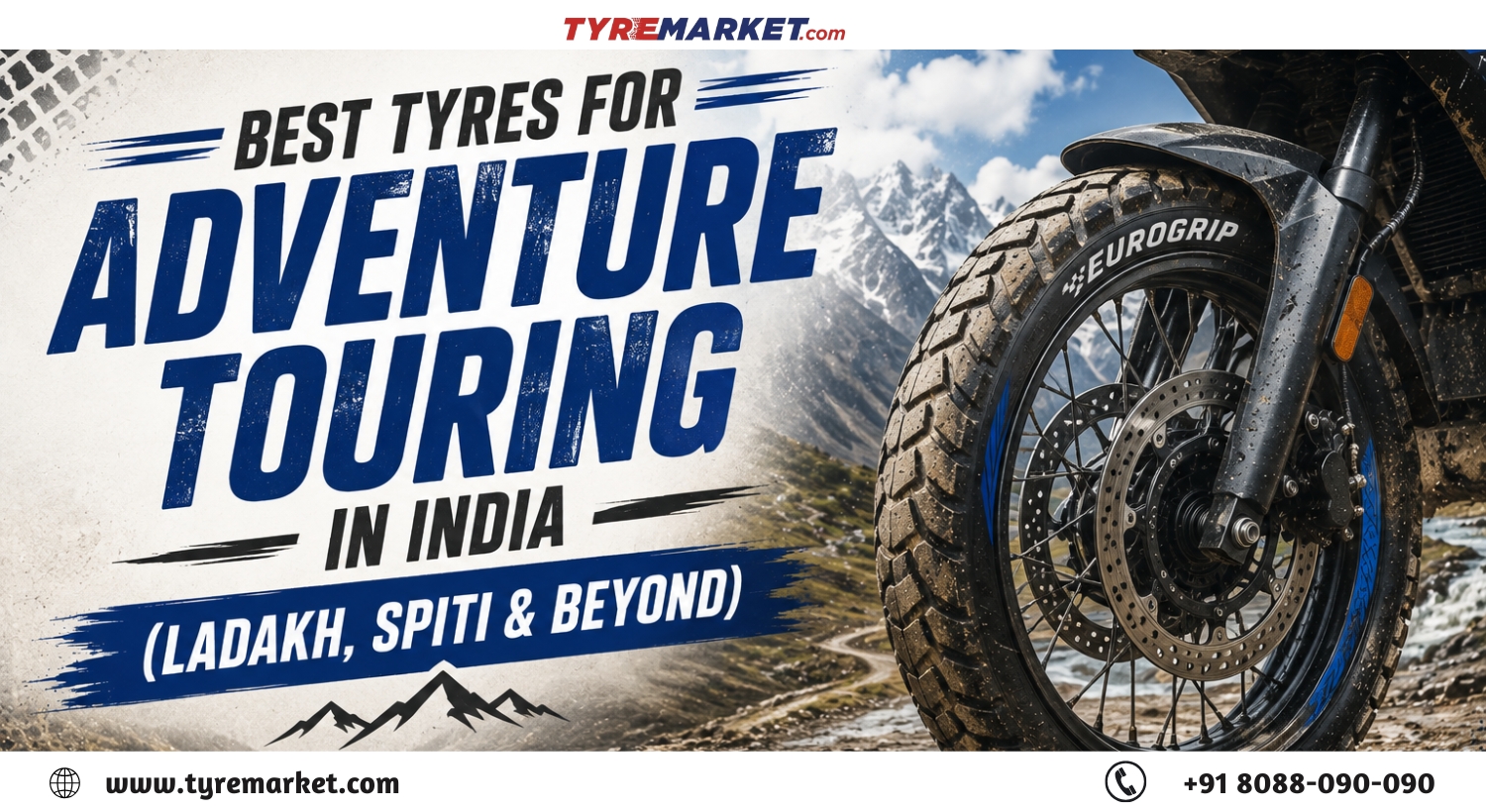
Best Tyres for Adventure Touring in India (Ladakh, Spiti & Beyond)

Key Takeaways
- The Eurogrip Trailhound SCR is the most balanced choice for a typical Ladakh or Spiti route, handling long highway stretches, mountain roads and occasional gravel without feeling out of place on any of them.
- Riders on a Royal Enfield Himalayan have a genuine size match with the Reise TrailR, which was developed and tested on the Himalayan itself.
- Tyre load index matters as much as tread pattern once you’re riding with full luggage. The Trailhound SCR’s 56-rated sizes carry up to 224 kg per tyre, a figure worth checking against your bike’s loaded weight before a long tour.
- Adventure touring tyres aren’t just about off-road grip. Highway stability, wet-road performance and durability matter just as much, since most touring kilometres are still ridden on tarmac.
Adventure touring takes a motorcycle through roads that most riders never see in everyday use. A single trip to Ladakh, Spiti or the Northeast can begin on an expressway, continue across broken mountain roads and finish on loose gravel or rocky trails. The same set of tyres has to stay comfortable during long highway hours and still inspire confidence as the road changes.
That is why choosing an adventure touring tyre involves more than picking the most aggressive tread pattern. Some tyres are built for covering long distances on tarmac while still offering enough grip for occasional trails. Others favour loose surfaces but sacrifice some comfort on the road. The right tyre choice for you will depend on the kind of journeys you actually ride.
What Makes a Good Adventure Touring Tyre?
A good adventure-touring tyre has to handle far more than just off-road riding. Highway stability, wet-road grip, cornering confidence and durability are just as important because most touring tyres still spend the majority of their time on paved roads.
The tread pattern also plays a big part in maintaining that balance. Larger tread blocks, for example, improve traction on gravel and loose surfaces. The spacing between the tread blocks, on the other hand, is optimised to help clear water and debris efficiently. Road-biased adventure tyres usually keep the blocks closer together, giving the motorcycle a smoother feel during long highway rides.
The tyre’s construction and rubber compound are also just as important. A high-silica compound, for example, helps ensure a consistent grip even as temperatures change. A stronger carcass or steel-belted radial construction, on the other hand, maintains the stability of the motorcycle when travelling with luggage or a pillion.
Beyond tread and compound, the load index printed on the tyre’s sidewall tells you the maximum weight the tyre can carry safely, which becomes especially important once you add a pillion, panniers and camping gear to a touring motorcycle. It’s a spec worth checking before a long trip, not just at the time of buying the tyre.
The best touring tyres offer all of these qualities together without becoming noisy or uncomfortable over long distances.
Which are the Best Tyres for Adventure Touring?
These five options cover everything from highway-heavy tours to mountain routes that include gravel, broken roads and occasional trails.
1. Best Overall Adventure Touring Tyre
Even when exploring the beautiful peaks of Ladakh or Spiti, most drivers spend far more time on tarmac than on loose terrain. The Eurogrip Trailhound SCR reflects that reality.
It uses a high-silica compound to maintain grip across changing temperatures, while the tread block geometry clears water efficiently without disrupting the stability of the tyre on the road. Radial sizes also feature a 0° steel-belt construction, giving the motorcycle a planted feel during long highway runs with luggage. Sizes carrying a load index of 56, such as the 100/90-18, are rated to carry up to 224 kg per tyre, which is a useful number to weigh against your bike’s kerb weight plus rider, pillion and panniers before setting off.
Once the road turns to gravel or broken mountain tracks, the tread provides enough bite to keep moving confidently without compromising the road manners expected of a touring tyre.
2. Best for Highway-Focused Touring
Some riders rarely leave the tarmac, even on long expeditions. The Michelin Anakee Adventure is aimed squarely at that style of touring.
Michelin combines 2CT and 2CT+ dual-compound technology with a high-silica compound, giving the centre of the tyre the durability needed for long highway days while the shoulders deliver stronger grip through mountain bends.
The tread pattern also disperses water efficiently, making it a dependable companion when the weather changes halfway through the ride.
3. Best for Mixed Road and Trail Riding
Some routes don’t stop where the tarmac ends. A diversion to a remote village, a gravel pass, or a rocky approach to a campsite can quickly change the ride.
The Pirelli Scorpion Rally STR has enough off-road ability for those sections without becoming tiring on the highway. Large tread blocks, a high-silica compound and a reinforced carcass improve traction on loose surfaces while keeping the motorcycle composed through long road sections.
For riders who deliberately include rough terrain in their plans, it strikes a sensible middle ground.
4. Best for Extended Road Tours
Adventure motorcycles in India spend far more time touring than tackling difficult trails. The Reise TrailR has been developed with those expectations in mind.
Its steel-belted radial construction, high-silica compound and interlocked tread pattern help keep the motorcycle stable through long highway stretches before the route gives way to mountain roads or gravel sections.
Reise positions it as a 90% road and 10% off-road tyre, which closely matches the way many Himalayan, V-Strom and Adventure owners use their motorcycles.
5. Best Premium Road-Focused Adventure Tyre
Not every touring motorcycle needs an aggressive tread pattern. Riders who stay on paved roads for most of the journey often benefit more from a tyre that feels settled through fast corners and long days in the saddle.
The Metzeler Karoo Street combines a high-silica compound with a variable tread block layout, giving it reassuring road manners while still leaving enough traction for gravel roads and mountain trails. It also wears evenly over long distances, which makes it a strong option for riders who tour regularly.
Which One Should You Choose?
Here’s a quick comparison table between the five, highlighting their USPs and intended use.
| Tyre | Best For | Road / Trail Focus | Why It Stands Out |
| Eurogrip Trailhound SCR | Balanced adventure touring | 80% / 20% | High-silica compound, 0° steel-belt radial construction, and a 224 kg per-tyre load rating on 56-index sizes |
| Michelin Anakee Adventure | Highway touring | 80% / 20% | 2CT & 2CT+ technology delivers stability, wet grip and long-distance comfort |
| Pirelli Scorpion Rally STR | Mixed road and trail riding | 60% / 40% | Large tread blocks provide stronger traction without compromising highway comfort |
| Reise TrailR 01 | Extended road tours | 90% / 10% | Steel-belted radial construction and interlocked tread pattern suit long-distance touring |
| Metzeler Karoo Street | Premium road touring | 85% / 15% | Variable tread layout balances confident road handling with light off-road capability |
If your route includes long highway stretches, mountain roads and the occasional gravel section, much like most rides across Ladakh or Spiti, the Eurogrip Trailhound SCR is an easy recommendation. It handles a wide range of conditions without ever feeling out of place on the road.
The Michelin Anakee Adventure suits riders who spend almost every kilometre on tarmac and want maximum comfort over long distances. If gravel roads and rough tracks are a regular part of the plan, the Pirelli Scorpion Rally STR offers more confidence once the surface begins to break up.
The Reise TrailR 01 is a practical choice for riders looking for a road-biased touring tyre that can also handle the occasional off-road section. The Metzeler Karoo Street, on the other hand, suits riders who place refined on-road manners above everything else.
Before You Leave for Ladakh or Spiti
A little preparation before you leave can prevent small issues from turning into major delays once you’re in the mountains.
- Check the tread depth: If the tyres are close to the wear indicators, replace them before the trip. Fresh tyres offer better grip on wet roads, gravel and broken mountain sections.
- Set the correct tyre pressure: Check the pressure before you start riding each morning and follow the motorcycle manufacturer’s recommended values.
- Carry a puncture repair kit: A tubeless puncture repair kit and a portable air inflator take up very little luggage space but can save hours if you pick up a puncture in a remote area.
- Inspect the tyres every evening: Look for cuts, embedded stones and sidewall damage after each day’s ride. Finding a problem early is much easier than discovering it halfway through the next mountain pass.
Final Thoughts
Adventure touring asks a lot from a tyre. It has to stay comfortable through long highway days, hold its line on winding mountain roads and find grip once the surface turns rough.
The Eurogrip Trailhound SCR stands out as the most balanced option for Indian adventure touring, while the Michelin Anakee Adventure, Pirelli Scorpion Rally STR, Reise TrailR 01 and Metzeler Karoo Street each suit a different style of touring.
Pick the one that fits your journey, look after it before you leave, and you’ll enjoy every kilometre a little more.
This guide focuses on choosing the right adventure touring tyre for your trip. For a closer look at the technology behind Eurogrip’s touring range, see our Eurogrip’s Latest Tyre Technology for Indian Adventure Riders and Eurogrip Touring Tyres Review guides.
FAQs
1. Which tyre is best for a Ladakh bike trip?
It depends on the route you have planned. For most riders, the Eurogrip Trailhound SCR is a well-rounded choice because it handles highways, mountain roads and occasional gravel with equal confidence. Riders spending almost the entire journey on tarmac can also consider the Michelin Anakee Adventure.
2. Do I need aggressive off-road tyres for Spiti?
Not always. Most routes to Spiti and Ladakh include long stretches of paved roads. Unless your plan includes difficult trails, a road-biased adventure touring tyre usually offers a better mix of comfort, grip and durability.
3. Should I reduce tyre pressure on gravel roads?
Lowering the tyre pressure slightly can improve grip on loose surfaces. Before heading back onto the highway, however, inflate the tyres to the recommended pressure. Riding long distances with underinflated tyres increases heat build-up and can cause the tread to wear more quickly.
4. How long do adventure touring tyres usually last?
Tyre life varies with riding style, road conditions, luggage and maintenance. Maintaining the manufacturer-recommended tyre pressure and regularly checking wheel alignment help the tyres wear more evenly over long distances.
5. What should I carry in case of a puncture?
A tubeless puncture repair kit, a portable air inflator, and a tyre pressure gauge are worth carrying on any long-distance tour. Fuel stations and repair shops can be hundreds of kilometres apart on some Himalayan routes.
6. What do long-distance riders actually recommend for tyres on Royal Enfield touring bikes?
For a Royal Enfield Himalayan specifically, the Reise TrailR is worth considering since its front tyre size matches the Himalayan’s stock fitment directly. Riders who spend most of their touring kilometres on tarmac, with only occasional trail sections, tend to prefer road-biased options like the Eurogrip Trailhound SCR or Michelin Anakee Adventure instead.
7. What tyres can handle a Leh Ladakh trip with full luggage on a Royal Enfield Himalayan safely?
Check the tyre’s load index against your bike’s fully loaded weight, including rider, pillion and panniers, rather than relying on tread pattern alone. The Reise TrailR is a natural fitment match for the Himalayan’s stock size, while the Eurogrip Trailhound SCR is a solid alternative for riders who want a more road-biased option with a clearly stated load rating.
8. How do I calculate if my motorcycle tyres can handle my weight plus luggage for touring?
Add up your motorcycle’s kerb weight, rider weight, pillion weight (if any) and luggage weight, then compare that total against the tyre’s rated load capacity, found using the load index number printed on the sidewall. A tyre rated for solo riding may not have enough margin once you’re touring with a full load.
9. Are radial tyres worth the extra cost for long-distance touring on Indian highways?
Radial tyres cope better with heat build-up and remain more stable during long hours at highway speeds than bias-ply tyres. That makes them a better fit for loaded touring and routes that combine highways with rough tracks. Bias-ply tyres still have their place, particularly for shorter rides, lower cruising speeds or riders who want a more affordable option.