Eurogrip Tyres for Pillion Riding: Comfort, Load Handling, and Safety

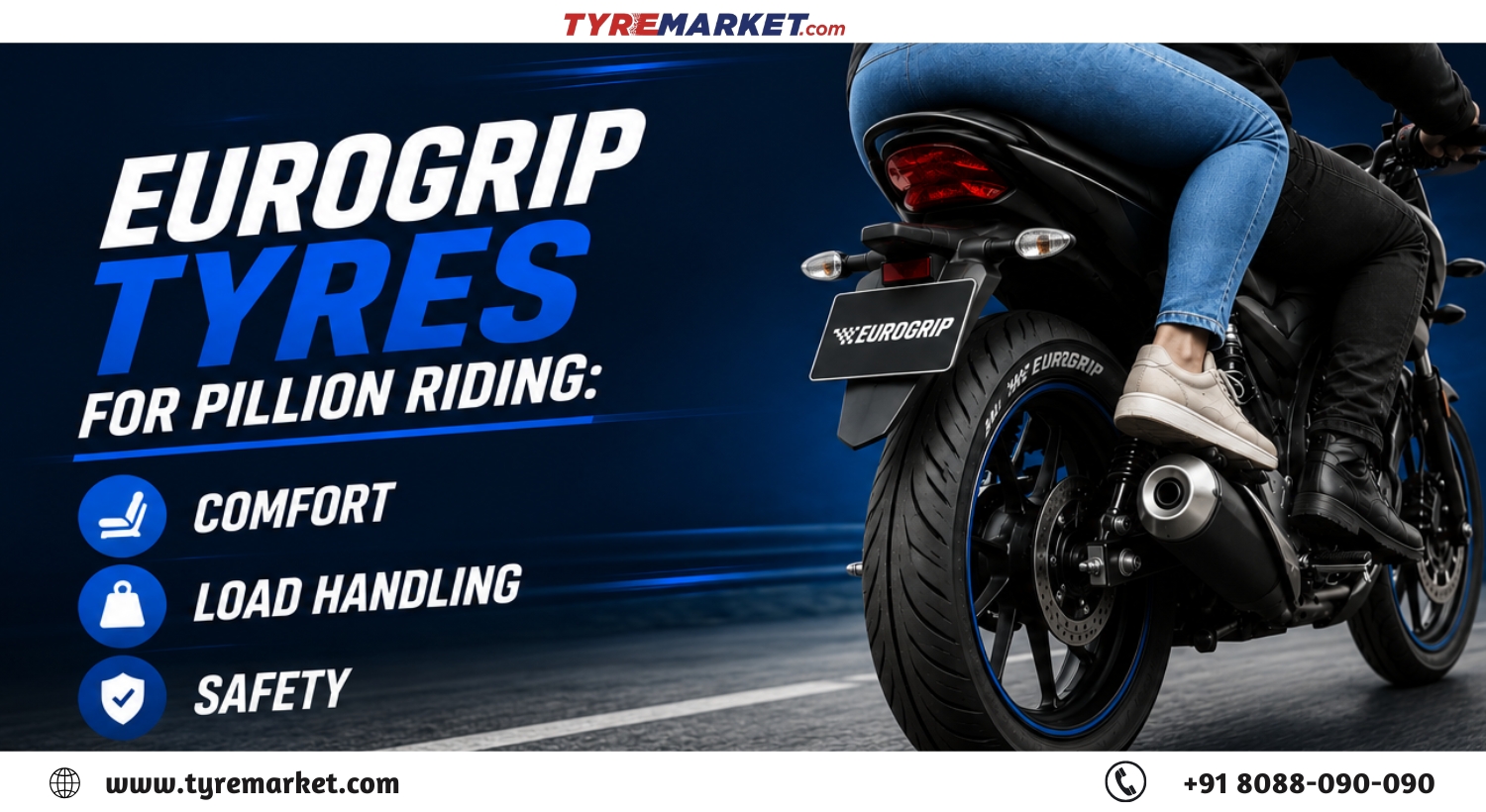
When you ride with a passenger on the back of your motorcycle, the physics of your ride changes instantly. The center of gravity shifts rearward, the suspension compresses significantly, and most importantly, the contact patch of your rear tyre is forced to do double the work.
In 2026, tyre technology has evolved to treat “pillion comfort” as a core engineering requirement rather than an afterthought. Eurogrip has been at the forefront of this shift, utilising reinforced carcass designs and specialised compound layering to ensure that “two-up” riding doesn’t compromise safety, stability, or the enjoyment of the journey with modern bike tyres.
In this guide, we’ll explore how the right rubber can transform your pillion’s experience from a shaky endurance test into a smooth, confident tour.
The Science of Load: Understanding the Load Index
Before we dive into comfort, we must address the mechanical foundation of pillion riding, i.e. the Load Index. Every bike tyre has a numerical code on its sidewall that represents the maximum weight it can safely carry at its maximum inflation pressure.
When you are riding with a pillion and potentially luggage, you are likely approaching your motorcycle’s Gross Vehicle Weight Rating (GVWR). A standard commuter tyre might have a load index of 52 (200 kg), which is sufficient for solo riding but can become “squishy” and unstable under a heavy load.
For performance touring, you want a tyre that provides a higher margin of safety.
Common Load Index Reference Table
Here’s a reference table to understand different load indices and what they mean for you.
| Load Index | Max Weight (kg) | Ideal Use Case |
| 48 | 180 kg | Lightweight Commuters (100-110cc) |
| 52 | 200 kg | Standard Street Bikes (150-200cc) |
| 58 | 236 kg | Performance Radials (Front) |
| 66 | 300 kg | Mid-weight ADVs and Cruisers |
| 71 | 345 kg | Heavy Tourers / Sport-Touring (Rear) |
If you frequently ride with a passenger, checking the motorcycle bike tyre load index, as explained above, ensures you aren’t overloading the tyre carcass, which can lead to overheating and structural failure.
Engineering for Stability: The 0° Steel Belt Advantage
One of the biggest complaints of pillions on a two-wheeler is the feeling of the bike “wallowing” or feeling “loose” in corners. This usually happens because a traditional bias-ply bike tyre deforms under the combined weight of two people.
To combat this, Eurogrip uses 0° Steel Belt technology in its flagship radial range, including the Roadhound. This “skeleton” of high-tensile steel runs parallel to the direction of travel, acting as a rigid brace.
Why this matters for your passenger:
- Shape Retention: The steel belt prevents the tyre from “ballooning” due to centrifugal force or flattening due to the pillion’s weight.
- Predictable Lean: When you tip the bike into a corner, the bike tyre maintains a consistent profile. This removes that nervous “falling” sensation that often frightens passengers.
- Heat Management: By reducing the internal friction caused by carcass deformation, the tyre runs cooler, which is vital for long-distance Eurogrip pillion comfort.
Comfort Beyond the Suspension: Vibration Dampening
The motorcycle’s shock absorbers handle the big bumps, but the tyre handles the “high-frequency” vibrations, including the grit, the expansion joints, and the micro-textures of the road.
Eurogrip’s high-performance tyres feature Tri-polymer compounds infused with high-strength carbon. This isn’t just about grip but also about molecular-level dampening. These compounds act as a secondary suspension layer, soaking up the “buzz” from the road before it reaches the footpegs and the seat.
For a pillion sitting directly over the rear axle, a tyre with excellent motorcycle tyre vibration dampening properties can mean the difference between a numb backside and a comfortable day in the saddle.
Braking and Grip: Managing the Extra Momentum
Physics dictates that a heavier bike takes longer to stop. When riding “two-up,” your rear bike tyre carries much more braking responsibility than it does when you are solo.
Eurogrip addresses this with Quadrazone Technology in its premium rear radials. The tyre is divided into different zones:
- Center Zone: A harder, more durable compound that handles the heavy load of straight-line cruising and resists “flat-spotting.”
- Shoulder Zones: Progressively softer rubber that provides “bite” during cornering.
This ensures that even with the extra momentum of a passenger, the tyre remains planted during emergency maneuvers. The high-silica content further ensures that the “grip that bites” works even on cold or wet asphalt, which is critical for pillion safety motorcycle tyres.
Top Eurogrip Recommendations for Pillion Riders
If you’re looking for the best Eurogrip tyres for 2-up riding, here are the three standout series for 2026:
-
The Sport-Touring King: Roadhound
For those on mid-to-high capacity motorcycles (300cc to 1000cc+), the Eurogrip Roadhound is the gold standard for comfort. Its dual-compound rear and 0° steel belt make it incredibly stable under load.
The tyre is designed for the rider who wants to disappear for a weekend with a partner and three pieces of luggage without the bike tyre feeling “mushy.”
-
The Adventure Specialist: Trailhound STR
If your journeys take you off the beaten path, the Trailhound STR (Street-Terrain-Road) is the choice. It offers the rugged look of an ADV tyre but features a carcass tuned specifically for road-biased touring stability.
The tyre handles the weight of a pillion exceptionally well on gravel and broken tarmac, providing a “cushioned” feel.
-
The Urban Workhorse: ATT Series
For daily commuters carrying a passenger to work or school, the ATT Series offers high-load durability at an affordable price point. Tyres like the ATT 250E are built with a reinforced nylon carcass that resists “rim digging” often seen on smaller bikes carrying heavy loads on under-inflated tyres.
The “PSI Secret”: Adjusting for the Extra Weight
Even the best tyre will fail to provide comfort if the air pressure is wrong. Most riders check their pressure once a month for solo riding and forget about it.
The Rule of Thumb for Pillion Riding:
When carrying a passenger, you typically need to increase your rear tire pressure by 3 to 5 PSI over your solo setting (always refer to your bike’s swingarm sticker).
- Under-inflated: The tyre will flex too much, making the bike feel “sluggish” and the pillion feels every bump in their spine.
- Correctly-inflated: The tyre maintains its engineered shape, providing a crisp response and better fuel economy despite the extra weight.
Pillion Safety Checklist: Before You Hit the Road
Before heading out on a two-up trip, perform this 60-second inspection:
- TWI (Tread Wear Indicator): Check if the tread is approaching the 0.8mm limit. A worn tyre has less rubber to dissipate the extra heat of a loaded ride.
- Sidewall Stress Marks: Look for any “cracking” or “bulging” which might indicate that the tyre was previously run under-inflated with a heavy load.
- Valve Stem Check: Ensure the valve cap is tight; under the high pressures of a loaded tyre, a small leak can become a major safety risk.
- Digital Registration: Ensure your performance tyres are registered on the Eurogrip portal to take advantage of the 2026 warranty benefits in case of accidental damage during your tour.
Conclusion: An Investment in Shared Confidence
Pillion riding is a team sport. When your motorcycle feels stable, predictable, and comfortable, your passenger relaxes. A relaxed passenger doesn’t fidget, doesn’t lean the wrong way, and doesn’t get fatigued, which ultimately makes you a safer rider.
By choosing a tyre with the right load index, advanced 0° steel belt construction, and vibration-dampening compounds, you aren’t just buying rubber; you’re buying confidence.
Eurogrip’s 2026 lineup proves that you don’t have to choose between solo performance and “two-up” comfort. With the right set of tyres and the correct PSI, the road ahead looks smoother for both of you.
Is your motorcycle ready for your next duo-adventure? Check your rear tyre’s load index today and feel the Eurogrip difference.
FAQs
- Does pillion riding accelerate rear tyre wear?
Yes. The rear tyre bears 60% to 70% of the total weight during two-up riding. This increased friction and heat lead to faster tread wear, especially in the center. Opting for dual-compound tyres, such as the Eurogrip Roadhound, helps extend tyre longevity.
- How can I tell if my tyre is overloaded?
Signs of overloading include sluggish steering, a “swaying” sensation at high speeds, and sidewalls that feel excessively hot to the touch after a short trip. Always verify your total weight against the motorcycle tyre load index explained on the sidewall.
- Are “soft” sport tyres okay for long-distance two-up touring?
Not ideally. Soft tyres are engineered to build heat quickly during solo sport riding. Under heavy loads, they can overheat, causing the rubber to become “greasy” and wear out rapidly. Sport-touring tyres offer a safer, more stable alternative.
- Why does my bike “bounce” with a passenger?
This is usually caused by low tyre pressure or soft suspension settings. An under-inflated tyre loses its damping efficiency and begins to “pogo.” Increasing your PSI to the manufacturer’s “Full Load” setting typically stabilises the ride.
- Is it safe to ride two-up on tube-type tyres?
While possible, tubeless tyres are safer for pillion riding. A puncture in a tube-type tyre often causes instant deflation, whereas a tubeless tyre loses air gradually, allowing for a safer, controlled stop.