Tyre Load Index and Speed Rating Explained for Eurogrip Buyers

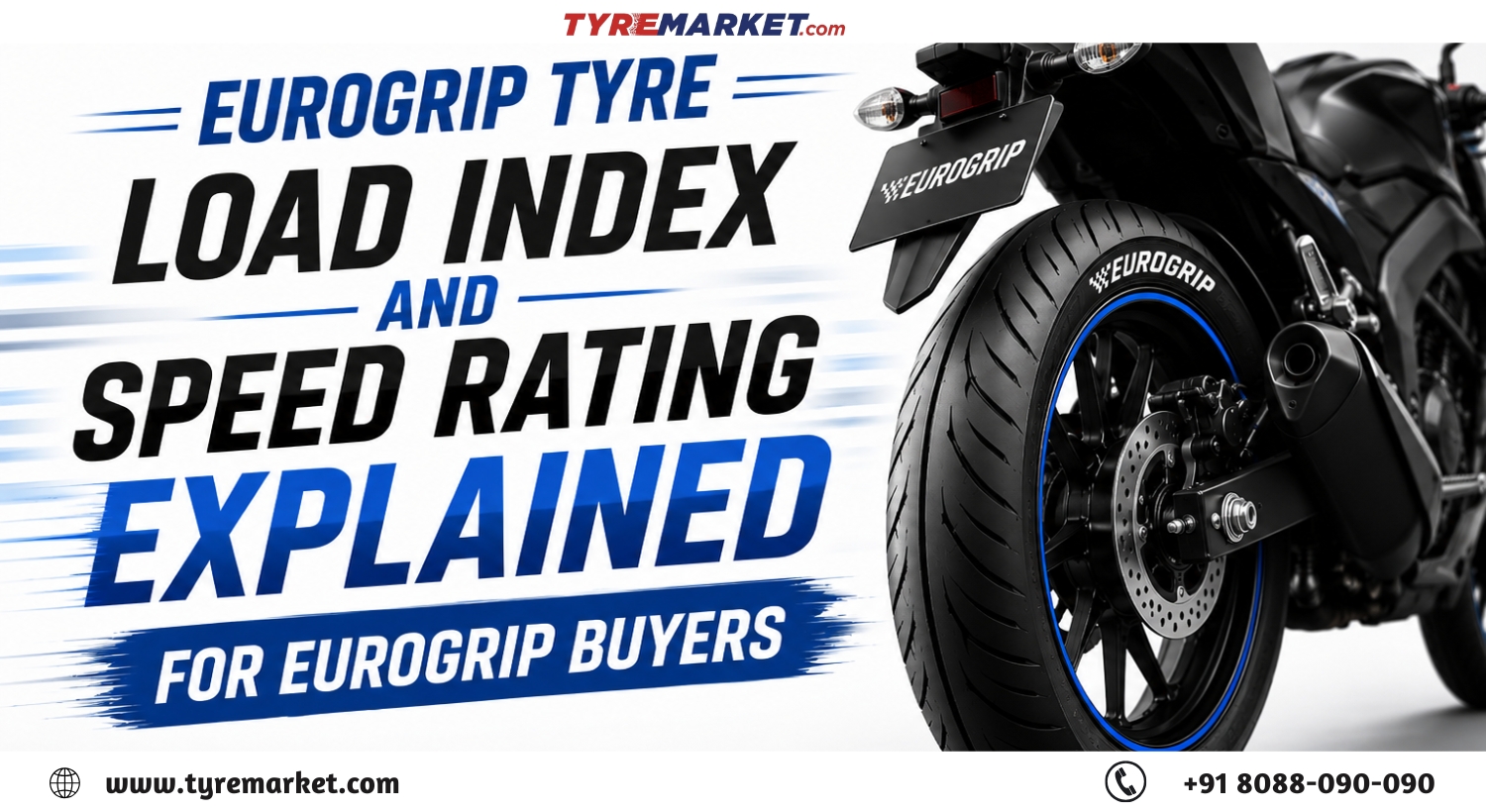
For many riders, the alphanumeric codes on a bike tyre sidewall look like an undecipherable jumble. However, in the high-performance motorcycling landscape of 2026, two of those markings, the Load Index and the Speed Rating, are the most critical data points you will ever read.
While most buyers focus on the brand or the tread pattern, these two ratings define the mechanical boundaries of your motorcycle. This bike tyre guide offers a deep dive into how to interpret these ratings for the Eurogrip range, ensuring your next purchase is both safe and performance-optimized.
The Invisible Limits of Rubber
Fitting a tyre that “looks like it fits” the rim is no longer enough. Every motorcycle has a specific “operating envelope,” a range of weight and speed within which it is designed to function safely. The Load Index and Speed Rating are the technical gatekeepers of this envelope.
If you fit a tyre with a lower rating than your bike requires, you aren’t just compromising performance but also risking a structural failure as the tyre rotates at high speeds, centrifugal force, and heat attempt to pull the rubber away from the internal carcass. These ratings tell you exactly how much “stress” the tyre can handle before those forces win.
The Anatomy of a Service Description
On any Eurogrip tyre, you will find the Service Description following the size markings (e.g., 150/60 R17). This usually consists of a two-digit number and a letter, such as 66H or 58W.
- The Number (Load Index): Represents the maximum weight capacity.
- The Letter (Speed Symbol): Represents the maximum sustained speed capability.
These two factors are inextricably linked to heat. More weight creates more friction, and more speed creates more centrifugal force. Both generate heat, and these ratings tell you the limit at which the tyre can dissipate that heat safely.
Part One: The Load Index Explained
The Load Index is a numerical code for the tyre that indicates the maximum weight a tyre can carry when inflated to its maximum pressure. This is not just the weight of the bike, but the Gross Vehicle Weight, which includes the weight of the bike, fuel, rider, pillion, and luggage.
For touring enthusiasts, this is vital. A Eurogrip Trailhound STR might have a load index of 71 (345 kg), whereas a lightweight commuter tyre might be rated at 52 (200 kg). If you load a “52” rated tyre with a passenger and heavy panniers, the sidewalls will flex excessively, leading to a “wavy” handling sensation and a high risk of a blowout.
Part Two: The Speed Rating Decoded
The Speed Rating of a tyre is depicted through a letter, such as H, V, and W.
- H (210 km/h): Common for sub-400cc performance bikes like the KTM Duke.
- V (240 km/h): Found on mid-weight street fighters.
- W (270 km/h): The flagship rating for superbikes, found on the Eurogrip Roadhound.
To achieve a ‘W’ rating, Eurogrip uses specialised internal structures, such as 0° steel belts. These belts prevent the bike tyre from “ballooning” under the massive centrifugal forces generated at 270 km/h.
If you under-rate your bike, for example, putting an ‘S’ (180 km/h) rated tyre on a machine capable of 200 km/h, the internal heat will eventually melt the bonding agents holding the tyre together.
Product Spotlights: Ratings for Popular Eurogrip Models
Understanding how these ratings apply to specific models helps you choose the right tool for the job.
The Superbike Standard: Eurogrip Roadhound (58W/73W)
The Roadhound is a sport-touring radial designed for heavy, fast machines. The rear tyre often carries a 73W rating, meaning it can support 365 kg at speeds up to 270 km/h. This makes it perfect for bikes like the Kawasaki Z900 or Triumph Street Triple.
The Sport-Radial Benchmark: Eurogrip Protorq Extreme (63H)
The Eurogrip Protorq Extreme’s speed rating of H (210 km/h) is perfectly suited to the 300cc-400cc segment. With a load index of 63 (272 kg), it provides the stiffness required for aggressive track days while remaining light enough for nimble urban handling.
The Heat Connection: Why Ratings Matter in India
In India, we often deal with ambient temperatures exceeding 40°C. Road surface temperatures can climb even higher. This environmental heat adds to the mechanical heat generated by the tyre.
Eurogrip’s high-performance radials use high-silica compounds that are designed to remain stable across a wide temperature range. However, if you overload a tyre in 45°C heat, the rubber can become “greasy,” losing its grip.
Staying within your motorcycle tyre safety ratings ensures that the compound remains within its optimal “working window,” providing consistent grip even on a hot highway.
Common Myths and Misconceptions
“Higher is always better.” Not necessarily. If you put a ‘W’ rated superbike tyre on a 100cc commuter, the carcass will be so stiff that the ride will feel harsh and uncomfortable. The bike isn’t heavy or fast enough to “work” the tyre’s structure. Match the rating to your bike’s requirements, not just the highest letter available.
“The rating applies even if the tyre is old.” False. Speed and load ratings are only guaranteed for tyres in good condition. If your bike tyre is five years old or has visible sidewall cracks, its ability to handle 210 km/h is significantly compromised.
Buying Checklist
When you are browsing for your next set of Eurogrip tyres, follow this 3-step verification:
- Check the Swingarm Sticker: Every bike has a sticker (usually on the swingarm or under the seat) listing the recommended Load Index and Speed Rating.
- Match or Exceed: You can always go higher in rating (e.g., fitting a ‘V’ instead of an ‘H’), but never lower.
- Digital Verification: Use the 2026 digital registration feature. By entering your tyre’s stencil code into the Eurogrip app, you can confirm the exact load and speed specifications for that specific batch.
Conclusion: Engineering Your Safety
Respecting the Load Index and Speed Rating is not just about following the law; it is an investment in your safety. These codes are the result of thousands of hours of testing by Eurogrip engineers to ensure your bike stays planted at its limit.
Before you finalise your purchase, take a moment to consult the technical charts. Choosing the right high-performance radial specs ensures that whether you are carrying a pillion through the mountains or hitting the speed traps on a track day, your tyres are up to the task.
FAQs
What does 71W mean on a tyre?
It means the tyre has a Load Index of 71 (capable of carrying 345 kg) and a Speed Rating of W (capable of speeds up to 270 km/h).
Can I mix different speed ratings on the front and rear?
It is generally not recommended to mix different speed ratings on the front and rear. Mixing ratings can lead to a “handling imbalance” where one tyre deforms differently from the other during cornering.
Does tyre pressure affect the load rating?
Yes, the tyre pressure does affect the load rating. The Load Index is only valid when the tyre is inflated to its maximum cold pressure. If you are under-inflated, your actual load capacity drops significantly.
Why do adventure tyres have lower speed ratings?
Adventure tyres, like the Trailhound, have blockier tread patterns. These blocks generate more heat at high speeds, so they are often rated ‘H’ or ‘V’ rather than ‘W’, as on smooth street tyres.